
Small businesses face a unique technology paradox in 2026. They need enterprise-grade systems to compete, but lack the resources to build full IT departments. This gap creates opportunities for strategic partnerships with technology advisors who understand both business constraints and digital potential. A small business IT consultant serves as the bridge between operational challenges and technological solutions, helping organizations implement systems that support growth without overwhelming budgets. The right consulting partnership transforms technology from a cost center into a competitive advantage.
Understanding the Small Business IT Consultant Role
A small business IT consultant operates differently from enterprise-focused advisors. These specialists understand the resource constraints, rapid decision-making cycles, and growth pressures that define smaller organizations. They bring technical expertise without the overhead of full-time staff.
The value proposition extends beyond fixing technical problems. Modern consultants align technology decisions with business strategy, ensuring every investment supports measurable outcomes. They evaluate existing systems, identify gaps, and recommend solutions that scale with organizational growth.
Core Services Provided
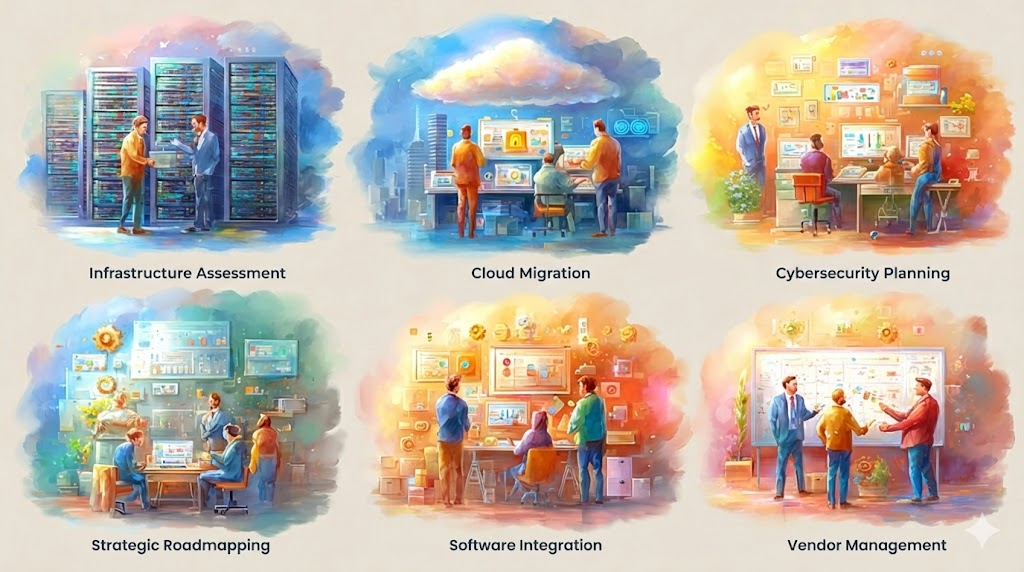
Small business IT consultants typically offer a comprehensive service portfolio:
Infrastructure assessment and optimization to ensure systems support current and future needs
Cybersecurity strategy and implementation to protect against evolving threats
Cloud migration planning and execution for improved flexibility and cost management
Software selection and integration to streamline operations
Technology roadmap development aligned with business objectives
Vendor management and negotiation to maximize value from technology investments
These services overlap with broader transformation goals. Organizations implementing agile and digital transformation initiatives benefit from IT consultants who understand how technology enables new ways of working.
Identifying When You Need External IT Expertise
Recognizing the right time to engage a small business IT consultant prevents costly mistakes and missed opportunities. Several indicators suggest external expertise would add value.
Growth transitions create technology demands that outpace internal capabilities. When expanding to new locations, adding team members, or launching new products, existing systems often struggle to keep pace. A consultant provides the expertise to scale infrastructure appropriately.
Security concerns warrant immediate attention. If your organization handles sensitive customer data, faces compliance requirements, or worries about cyber threats, specialized expertise becomes essential. According to research on IT consulting services suitable for small businesses, cybersecurity represents one of the most critical areas where consultants add immediate value.
Technology refresh cycles benefit from external perspective. When considering major investments in new systems, consultants provide unbiased recommendations based on industry best practices rather than vendor relationships or past preferences.
Budget Optimization Through Consulting
Many small businesses hesitate to engage consultants due to perceived costs. However, the benefits of small business IT consulting services often include significant cost savings through strategic vendor negotiations, preventing expensive mistakes, and right-sizing technology investments.
A small business IT consultant helps avoid common pitfalls:
Overbuying technology that exceeds actual needs
Selecting incompatible systems that require expensive integrations
Missing security vulnerabilities that lead to costly breaches
Inefficient licensing arrangements that waste budget
Delayed implementation that extends the period before realizing value
Selecting the Right IT Consultant for Your Business
The consultant selection process requires careful evaluation beyond basic qualifications. The right partner understands your industry, communicates clearly, and aligns with your organizational culture.
Essential Evaluation Criteria
Start by assessing technical capabilities relevant to your specific needs. A consultant specializing in healthcare compliance may not suit a retail business focused on e-commerce infrastructure. Review case studies and client testimonials from similar organizations.
Communication style matters as much as technical expertise. The best small business IT consultant translates complex technical concepts into business terms. During initial conversations, notice whether they ask about business objectives before proposing solutions.
Verify credentials and experience through specific questions:
What similar businesses have you supported?
How do you stay current with emerging technologies?
What is your approach to vendor neutrality?
How do you measure success in consulting engagements?
Can you provide references from long-term clients?
The guidance on selecting the right IT consultant for small businesses emphasizes the importance of finding partners who demonstrate both technical competency and business acumen.
Service Model Considerations
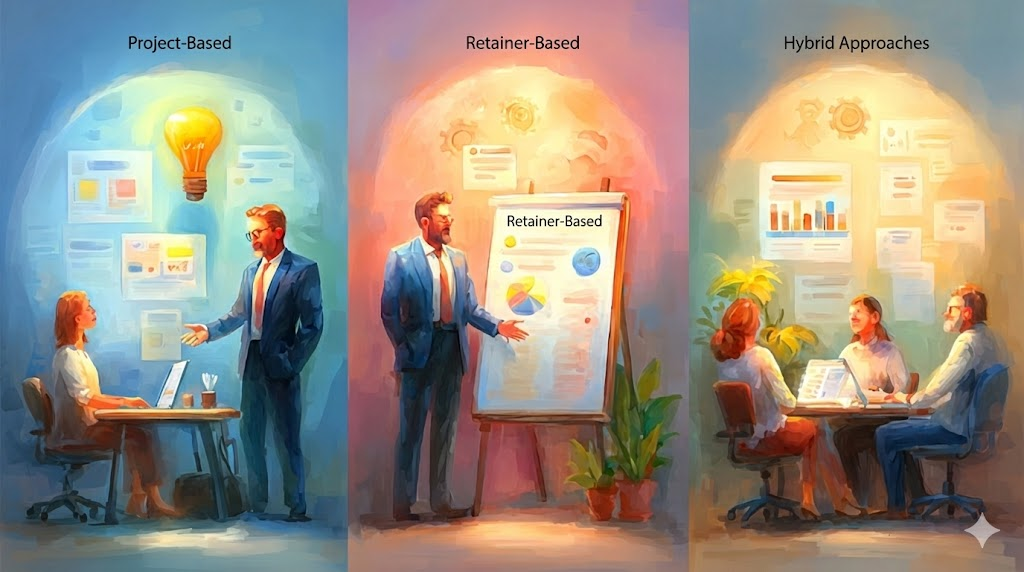
IT consultants typically offer several engagement models. Understanding these options helps match the service structure to your organizational needs.
Project-based consulting works well for defined initiatives like cloud migrations or system implementations. You engage the consultant for a specific scope, timeline, and budget. This model provides predictability but may lack ongoing support.
Retainer arrangements deliver continuous access to expertise. Monthly retainers ensure consultants remain available for strategic guidance, troubleshooting, and planning. This model suits organizations with evolving technology needs who benefit from consistent advisor relationships.
Hybrid models combine project work with ongoing support, offering flexibility while maintaining strategic continuity. Many successful partnerships evolve from initial projects into longer-term advisory relationships.
Integrating IT Consulting with Broader Transformation
Technology decisions rarely exist in isolation. The most effective small business IT consultant integrates their recommendations within larger organizational transformation efforts. This integration ensures technology enables rather than constrains business evolution.
Alignment with Agile Practices
Organizations adopting modern working methods need technology that supports collaboration, transparency, and rapid iteration. IT infrastructure should enable rather than hinder agile practices. This includes tools for remote collaboration, automated workflows, and data accessibility.
The intersection of AI and agile transformation illustrates how technology consulting extends beyond traditional IT support. Consultants who understand both technical implementation and organizational change management deliver greater value.
Consider how IT decisions impact:
Team collaboration capabilities across locations
Access to real-time data for decision-making
Automation of repetitive processes
Integration between different business functions
Scalability to support growth without major overhauls
Supporting Digital Transformation Goals
Digital transformation requires more than new software. It demands rethinking how technology supports customer experience, operational efficiency, and business model innovation. A strategic small business IT consultant helps connect tactical technology choices to these broader objectives.
When evaluating financial services digital transformation or other industry-specific initiatives, IT infrastructure provides the foundation. Consultants ensure technology roadmaps align with transformation timelines and objectives.
Best Practices for Successful Consulting Relationships
Maximizing value from IT consulting requires active partnership rather than passive consumption of advice. Both parties share responsibility for relationship success.
Setting Clear Expectations
Begin every engagement with explicit documentation of objectives, deliverables, timelines, and success metrics. Ambiguity creates frustration and wastes resources. Following IT consulting best practices includes defining scope boundaries and communication protocols upfront.
Documentation standards should specify:
Frequency and format of progress updates
Decision-making authority and approval processes
Access to systems and information
Change request procedures
Escalation paths for issues
Maintaining Strategic Focus
IT consulting delivers maximum value when focused on strategic priorities rather than tactical firefighting. While consultants may help resolve immediate technical issues, their primary contribution should advance long-term objectives.
Regularly review technology roadmaps against business goals. Quarterly strategic sessions help ensure IT initiatives continue supporting organizational priorities as circumstances evolve. This forward-looking approach distinguishes strategic consulting from basic technical support.
The expertise found in building high-impact transformation teams applies equally to IT consulting relationships. Consultants function as extended team members who bring specialized capabilities.
Common Challenges and Solutions
Even strong consulting relationships encounter obstacles. Anticipating common challenges enables proactive mitigation.
Managing Scope Creep
Technology projects frequently expand beyond initial parameters. Features that seemed simple reveal complexity during implementation. Business needs evolve mid-project. Without careful management, scope creep derails timelines and budgets.
A disciplined small business IT consultant implements change control processes. Any scope modification requires documented impact assessment, budget adjustment, and timeline revision. This rigor protects both parties and maintains project viability.
Balancing Innovation with Stability
Small businesses need reliable systems that support daily operations. Simultaneously, they must remain competitive by adopting new technologies. This tension between stability and innovation challenges many organizations.
Consultants help navigate this balance by:
Implementing changes in phases to minimize disruption
Maintaining separate development and production environments
Establishing rollback procedures before major changes
Providing training before deploying new systems
Monitoring performance after implementations
The practical guidance on technology upgrades for small consulting firms demonstrates how incremental improvements deliver value without overwhelming resources.
Building Long-Term Technology Capability
The ultimate goal of IT consulting extends beyond solving immediate problems. Strategic consultants transfer knowledge that builds internal capability over time.
Knowledge Transfer Approaches
Effective consultants document their work, explain their reasoning, and involve internal team members in decision-making. This transparency creates organizational learning that persists after the consulting engagement ends.
Training components should include:
System administration basics for key staff
Troubleshooting procedures for common issues
Vendor contact information and support processes
Documentation of configuration decisions and rationale
Regular review sessions to reinforce learning
Organizations implementing training and capability building programs recognize that sustainable transformation requires developing internal expertise alongside external support.

Measuring Consulting Impact
Quantifying consulting value justifies investment and guides future decisions. Establish measurement frameworks before engagements begin to ensure relevant data collection.
Review these metrics quarterly with your small business IT consultant to assess progress and adjust strategies. Data-driven evaluation replaces subjective judgment with objective evidence.
Emerging Technology Considerations for 2026
The technology landscape evolves continuously. Consultants help small businesses navigate emerging trends without chasing every new innovation.
Artificial Intelligence Integration
AI capabilities that once required enterprise resources now exist within reach of smaller organizations. From automated customer service to predictive analytics, AI offers operational advantages when implemented strategically.
A knowledgeable small business IT consultant helps identify high-value AI applications specific to your industry and scale. They distinguish between genuine opportunities and overhyped solutions, ensuring technology investments deliver measurable returns.
The comprehensive guide on AI transformation explores how organizations integrate artificial intelligence without losing focus on core business objectives. This balance proves especially critical for resource-constrained small businesses.
Cloud Optimization Strategies
Cloud computing matured from novelty to necessity. However, many organizations struggle with cloud cost management and architecture optimization. Consultants provide expertise in right-sizing cloud resources, implementing cost controls, and architecting for both performance and efficiency.
Key cloud optimization areas include:
Workload placement - determining which applications benefit from cloud versus on-premise deployment
Service tier selection - matching performance requirements to appropriate cloud service levels
Data management - implementing storage strategies that balance accessibility with cost
Security architecture - designing cloud environments that protect sensitive information
Disaster recovery - establishing backup and recovery procedures leveraging cloud capabilities
Cybersecurity Evolution
Threat landscapes shift constantly. What protected your organization last year may prove inadequate today. Staying current with security best practices represents a significant challenge for small businesses without dedicated security staff.
According to IT best practices for small business, foundational security measures include password management, regular updates, and employee training. Consultants extend these basics with advanced threat detection, incident response planning, and compliance management.
Maximizing Return on Consulting Investment
Strategic consulting relationships deliver returns that exceed fees paid. Achieving this outcome requires intentional effort from both consultant and client.
Preparation Before Engagement
Organizations ready for consulting work complete preliminary steps that accelerate value delivery. Document current systems, identify known pain points, and articulate business objectives clearly. This preparation allows consultants to focus on solutions rather than discovery.
Gather relevant information including:
Current technology inventory and licensing details
Recent IT incidents or challenges
Growth plans and timeline expectations
Budget parameters and approval processes
Internal stakeholder priorities and concerns
Active Partnership During Implementation
The most successful consulting relationships resemble partnerships rather than service transactions. Clients who engage actively, provide timely feedback, and make decisions promptly enable consultants to work more efficiently.
Schedule regular check-ins beyond formal status meetings. Quick conversations often resolve questions that might otherwise stall progress. Assign a dedicated internal contact who coordinates consultant access to information and stakeholders.
Drawing from insights on effective business consulting, successful relationships balance consultant expertise with client knowledge of organizational context and culture.
Transitioning to Sustainable Operations
Well-designed consulting engagements include explicit transition plans. Rather than creating dependency, strategic consultants build toward sustainable operations that require minimal ongoing external support.
Transition elements include comprehensive documentation, knowledge transfer sessions, and staged responsibility handoff. The consultant remains available for questions during an adjustment period but gradually reduces involvement as internal capability develops.
Following recommendations for growing small business IT, sustainable approaches emphasize scalable systems and processes that accommodate organizational growth without requiring constant consultant intervention.
Future-Proofing Your Technology Strategy
Technology investments should serve organizations for years, not months. Future-proof strategies balance current needs with anticipated evolution.
Building Flexible Architectures
Rigid, proprietary systems create vendor lock-in and limit adaptation. A forward-thinking small business IT consultant recommends flexible architectures using open standards and interoperable components. This approach preserves options as business needs change.
Flexibility manifests through:
Modular system design allowing component replacement without full overhauls
API-first integration enabling easy connections between different platforms
Cloud-native architectures supporting rapid scaling and geographic expansion
Platform independence avoiding dependence on single vendors
Data portability ensuring information remains accessible across systems
Continuous Improvement Mindset
Technology strategy requires ongoing attention rather than periodic overhauls. Establish regular review cycles that assess performance, identify opportunities, and adjust priorities. Quarterly technology planning sessions maintain strategic alignment.
The principles behind transformation engineering apply to IT strategy. Transformation represents continuous evolution rather than discrete projects. Technology roadmaps should reflect this reality through iterative improvement cycles.
Organizations that view technology as dynamic rather than static position themselves for sustained competitive advantage. Your small business IT consultant serves as guide through this ongoing evolution, providing expertise that complements internal capabilities.
Strategic technology decisions separate thriving small businesses from those struggling to keep pace with change. The right small business IT consultant brings expertise that transforms technology from obstacle to enabler, supporting growth while managing risk. Whether you're navigating digital transformation, scaling operations, or building new capabilities, expert guidance accelerates progress and prevents costly missteps. Lithe helps organizations work smarter and deliver faster through digital, agile, and AI-driven transformation that turns strategy into measurable outcomes. Our approach blends strategic vision with hands-on delivery, supporting companies that have outgrown traditional methods and need a partner who understands both technology and business transformation.
