
The way organizations operate has fundamentally changed. Traditional methods that once drove productivity now create bottlenecks, while competitors who've embraced modern approaches are delivering faster and smarter. If you're looking to improve work across your organization, the solution isn't simply working harder or adding more resources. It's about transforming how work gets done through strategic use of digital tools, agile methodologies, and intelligent automation. This shift requires rethinking everything from planning to delivery, ensuring that your teams have the capabilities, processes, and technologies to turn strategy into measurable outcomes.
Understanding What It Means to Improve Work
To improve work effectively means addressing both the visible symptoms and underlying causes of inefficiency. Many organizations focus on surface-level fixes like new software tools or reorganization charts without addressing fundamental issues in how teams collaborate, make decisions, and deliver value.
Modern work improvement involves three interconnected dimensions. First, the structural dimension includes how teams are organized, how decisions flow through the organization, and how resources are allocated. Second, the technological dimension encompasses the digital tools, automation capabilities, and data infrastructure that enable faster, smarter work. Third, the cultural dimension reflects the mindsets, behaviors, and ways of working that either enable or constrain performance.
The Cost of Outdated Work Methods
Organizations clinging to traditional approaches face mounting challenges:
Delayed time-to-market as lengthy approval chains slow product launches
Missed opportunities when competitors adapt faster to market changes
Talent drain as skilled workers seek more dynamic environments
Inefficient resource use through redundant processes and manual workflows
Poor strategic alignment between what teams build and what customers need
The financial impact extends beyond obvious inefficiencies. Research shows that organizations with outdated work methods spend up to 40% of their time on low-value activities that could be automated or eliminated entirely.
Building a Foundation for Sustainable Improvement
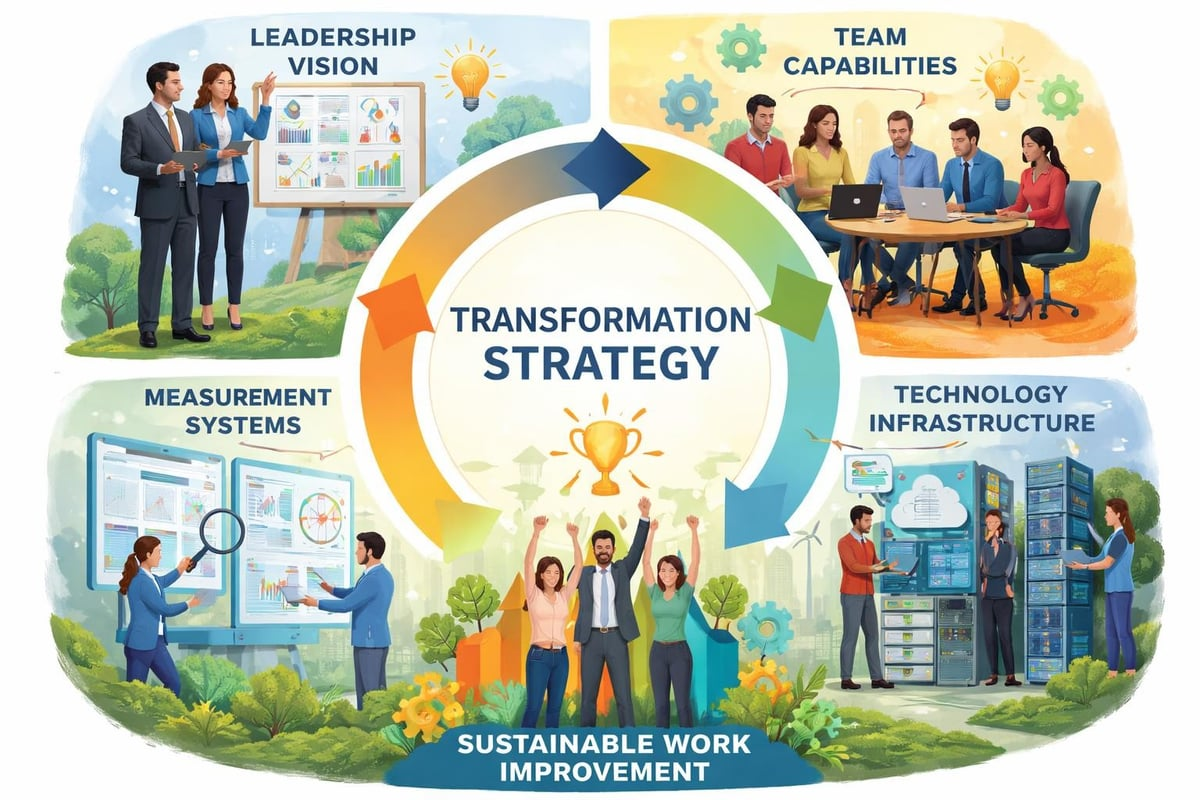
Sustainable efforts to improve work start with clarity about what you're trying to achieve. Before implementing new tools or methodologies, organizations need a clear transformation strategy that connects day-to-day operations to broader business outcomes.
This foundation rests on several key pillars. Leadership alignment ensures that executives share a common vision for how work should evolve. Capability development builds the skills teams need to operate in new ways. Technology enablement provides the infrastructure for modern work practices. Measurement frameworks track progress and demonstrate value.
Creating Your Transformation Roadmap
A practical roadmap to improve work follows a structured approach:
Assess current state through workshops, data analysis, and team feedback
Identify priority areas where improvements deliver maximum value
Design future state with clear processes, roles, and capabilities
Build pilot initiatives to test approaches and gather learnings
Scale successful patterns across departments and teams
Embed continuous improvement as an ongoing practice
Each phase requires different competencies and resources. Organizations often benefit from partnering with specialists who've guided similar transformations. The agile and digital transformation guide your 2026 roadmap provides detailed frameworks for structuring this journey.
Implementing Agile Practices at Scale
Agile methodologies offer proven frameworks to improve work through iterative delivery, continuous feedback, and adaptive planning. However, many organizations struggle to extend agile practices beyond individual teams to achieve true enterprise agility.
Agile at scale means more than running sprints in engineering departments. It requires rethinking portfolio management, budgeting cycles, governance structures, and how different departments collaborate. Organizations need to balance autonomy with alignment, giving teams freedom to innovate while ensuring their work contributes to strategic objectives.
The shift requires both structural changes and cultural evolution. Teams need new skills in facilitation, estimation, and collaboration. Leaders must learn to guide through influence rather than command, creating environments where teams can self-organize around outcomes.
Leveraging AI to Transform Workflows
Artificial intelligence offers unprecedented opportunities to improve work by automating repetitive tasks, enhancing decision-making, and uncovering insights buried in data. The key is integrating AI thoughtfully rather than deploying technology for its own sake.
Successful AI transformation starts with identifying high-value use cases. Look for processes that are repetitive, data-intensive, or require pattern recognition. Common applications include customer service automation, predictive analytics for planning, document processing, and intelligent workflow routing.
Practical AI Implementation Steps
Organizations looking to improve work through AI should follow a disciplined approach:
Start with clear business problems rather than technology solutions
Ensure data quality and accessibility as foundation for AI systems
Build internal AI literacy so teams understand capabilities and limitations
Pilot with contained scope to validate approaches before scaling
Integrate AI into existing workflows rather than creating parallel systems
Monitor performance and bias to ensure ethical, effective deployment
The human element remains critical. AI should augment human capabilities, not replace human judgment. Teams need training to work effectively with AI tools, understanding when to trust automation and when human expertise is essential. Platforms like Augmnt help organizations find specialized AI talent to build these capabilities.
Redesigning How Teams Collaborate
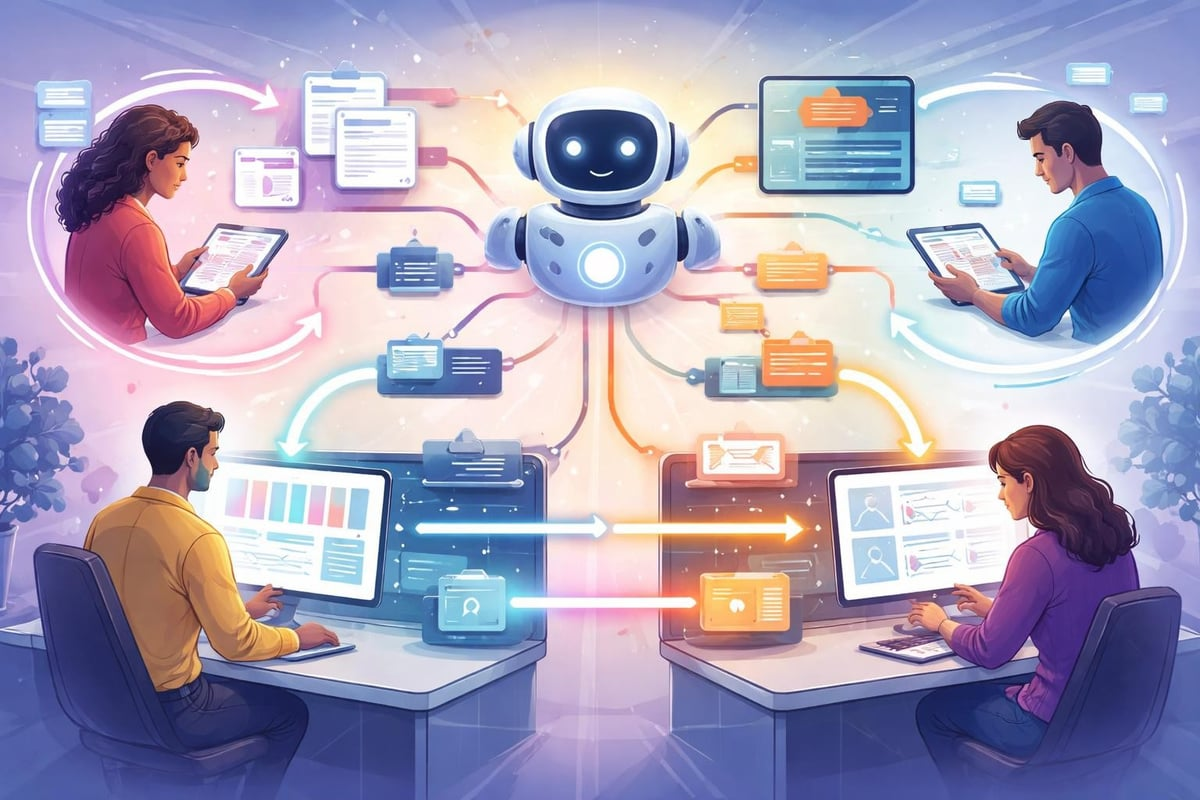
To genuinely improve work, organizations must rethink collaboration patterns. Traditional hierarchies create information bottlenecks and slow decision-making. Modern approaches emphasize network structures where information flows freely and decisions happen close to the work.
Cross-functional teams represent a fundamental shift from functional silos. Rather than marketing, engineering, and operations working sequentially, integrated teams combine these skills to deliver complete solutions. This structure accelerates delivery, improves quality, and increases team engagement.
However, cross-functional teams require new supporting mechanisms. Clear roles and responsibilities prevent confusion about accountability. Shared objectives align different specialties toward common goals. Regular ceremonies create rhythm and transparency. The complete guide to creating a team successfully in 2026 offers detailed frameworks for building high-performing teams.
Enabling Remote and Hybrid Work
The evolution toward distributed work demands new approaches to collaboration. Organizations that successfully improve work in hybrid environments focus on asynchronous communication, clear documentation, and intentional relationship-building.
Key practices include establishing core collaboration hours while respecting flexibility, using video thoughtfully rather than defaulting to meetings, documenting decisions in accessible systems, and creating virtual spaces for informal interaction. Technology alone doesn't solve these challenges. Teams need explicit norms about communication, decision-making, and accountability.
Measuring What Matters
You can't improve work without measuring it effectively. However, traditional metrics often drive counterproductive behavior. Lines of code written, hours logged, or features shipped tell you little about actual value delivered.
Modern measurement frameworks focus on outcome metrics that reflect customer value and business impact. These include customer satisfaction scores, time-to-value for new features, revenue per employee, and innovation rate. Leading indicators help teams course-correct before problems become critical, while lagging indicators confirm whether changes created lasting impact.
Effective measurement requires balancing quantitative data with qualitative insights. Numbers reveal patterns, but conversations with teams and customers provide context. Regular retrospectives help teams reflect on what's working and what needs adjustment.
Developing Capabilities for Modern Work
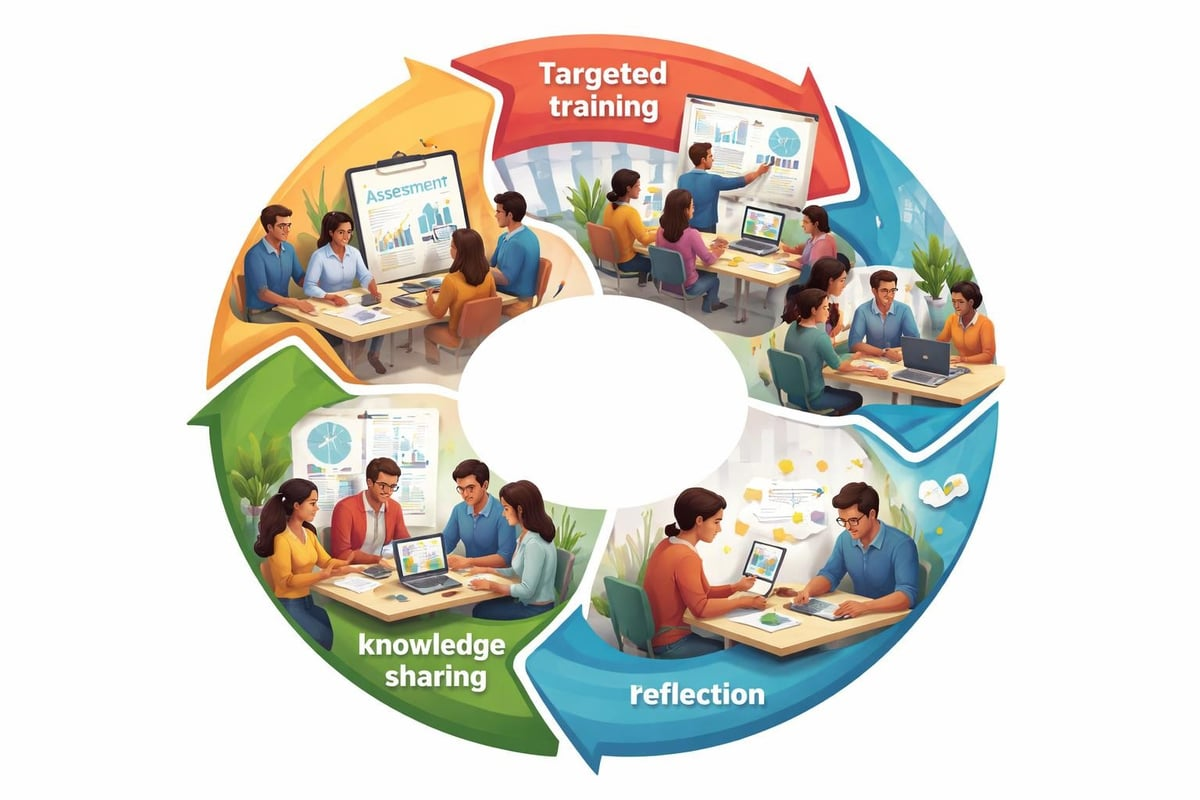
Organizations can't improve work without investing in people's capabilities. The skills that drove success historically may not align with future needs. Systematic capability development ensures teams can execute new ways of working effectively.
Tailored training programs address specific skill gaps identified through assessment. Rather than generic courses, effective development connects directly to the work teams do. Practical exercises, real project application, and coaching reinforce learning far better than passive instruction.
Leaders require different capabilities than individual contributors. Modern leadership emphasizes coaching over directing, creating clarity over controlling details, and building systems over solving problems. The lead transformation guide strategies for success in 2026 explores these leadership competencies in depth.
Creating Learning Organizations
To improve work continuously, organizations need cultures that value learning. This means normalizing experimentation, treating failures as learning opportunities, and dedicating time for reflection and knowledge sharing.
Practical approaches include:
Communities of practice where specialists share expertise across teams
Internal knowledge bases that capture and distribute learnings
Shadowing programs that expose people to different parts of the business
Innovation time allowing exploration of new ideas and approaches
Post-implementation reviews that extract lessons from completed initiatives
These practices compound over time, creating organizations that get smarter with each project and adapt faster to changing conditions.
Integrating Strategy with Execution
One of the most common failures in efforts to improve work is the disconnect between strategy and execution. Leadership teams develop ambitious plans that never translate into changed behavior on the ground. Conversely, teams execute efficiently on work that doesn't advance strategic priorities.
Strategy execution frameworks create clear line of sight from boardroom vision to daily team activities. Objectives and Key Results (OKRs) represent one popular approach, cascading strategic goals into measurable team objectives. Other methods include Balanced Scorecards, Strategy Maps, and lean portfolio management.
The key is creating regular cadences that keep strategy visible and relevant. Quarterly planning sessions align teams around priorities. Monthly reviews track progress and surface obstacles. Weekly standups maintain momentum on current initiatives. These rhythms ensure strategy isn't a once-yearly planning exercise but a living guide for decision-making.
Balancing Flexibility with Direction
Organizations must balance strategic direction with tactical flexibility. Overly rigid plans can't adapt to market changes or new information. Complete flexibility leads to drift and wasted effort.
The solution involves setting clear outcomes while leaving implementation details to teams. Leadership defines what needs to be achieved and why it matters. Teams determine how to accomplish those objectives, applying their expertise and adapting to circumstances. This balance enables both alignment and innovation.
Addressing Resistance and Building Buy-In
Efforts to improve work inevitably face resistance. People naturally prefer familiar patterns even when those patterns create problems. Successful transformation requires understanding and addressing the human side of change.
Resistance typically stems from legitimate concerns. People worry about job security when automation is introduced. They question whether new methods will actually work. They feel overwhelmed by changing everything while maintaining current operations. Acknowledging these concerns openly builds trust and creates space for productive dialogue.
Building buy-in requires demonstrating value, not just declaring change. Pilot programs let skeptics see results before committing fully. Quick wins build momentum and confidence. Involving people in designing solutions creates ownership rather than compliance. The transformation is a people business perspective emphasizes these human-centered approaches.
Sustaining Momentum Through Challenges
Transformation rarely follows a smooth path. Organizations encounter technical obstacles, unexpected constraints, and inevitable setbacks. Sustaining momentum requires resilience and adaptability.
Practical approaches include celebrating progress while acknowledging challenges, maintaining transparent communication about status and obstacles, protecting dedicated transformation resources from competing priorities, and adjusting plans based on learnings without abandoning core objectives. Leaders who normalize course corrections and treat challenges as learning opportunities create environments where teams persist through difficulties.
Designing Customer-Centric Solutions
Organizations ultimately improve work to deliver better value to customers. Yet many transformation efforts focus internally without connecting to customer outcomes. The most effective improvements start with deep customer understanding and work backward to required capabilities.
Customer journey mapping reveals where current experiences fall short and where improvements create maximum impact. These insights guide prioritization, ensuring teams focus on changes that customers actually value. The guide to innovation in customer experience for 2026 provides frameworks for this customer-centric approach.
Modern product and service design emphasizes rapid iteration based on customer feedback. Rather than building complete solutions before validating assumptions, teams release minimum viable products, gather real-world usage data, and evolve offerings based on evidence. This approach reduces risk while accelerating time-to-value.
Building Feedback Loops
Continuous improvement requires continuous feedback. Organizations need systematic mechanisms to capture customer insights, operational data, and team observations.
Effective feedback loops include regular customer interviews and surveys, usage analytics from digital products, support ticket analysis, employee feedback channels, and competitive intelligence. The key is closing the loop by acting on insights, not just collecting them. Teams should regularly review feedback, identify patterns, and adjust priorities accordingly.
Enabling Technology Infrastructure
To improve work sustainably, organizations need modern technology infrastructure that enables rather than constrains new ways of working. Legacy systems designed for stability and control often prevent the agility and automation that modern work requires.
Digital transformation involves more than replacing old systems with new ones. It requires rethinking the entire technology landscape including how systems integrate, how data flows, how security is maintained, and how infrastructure scales. Cloud platforms, API architectures, and modern development practices enable the flexibility today's organizations need.
Organizations should prioritize infrastructure investments that multiply team effectiveness. Developer platforms that automate deployment enable faster delivery. Data platforms that centralize information improve decision-making. Collaboration tools that work across devices enable distributed teams. Each investment should clearly connect to improved business outcomes.
The transformation engineering guide strategies for 2026 success explores how modern engineering practices accelerate transformation while maintaining quality and security.
Organizations that successfully improve work in 2026 share common traits: they connect strategy to execution, they balance technology with human capabilities, and they measure outcomes rather than just activities. Whether you're beginning your transformation journey or accelerating existing efforts, the path forward requires both strategic clarity and hands-on execution expertise. Lithe helps organizations navigate this complexity, blending transformation strategy with practical delivery to turn vision into measurable results across digital, agile, and AI-driven initiatives.
