
By 2026, over 40% of organizations are expected to reach advanced artificial intelligence maturity, marking a dramatic shift in the digital landscape. This rapid adoption highlights just how deeply AI services are transforming both business operations and everyday experiences.
With intelligent automation, companies are discovering new ways to innovate, automate routine processes, and remain competitive in a technology-driven world. The need for smart, scalable solutions is clearer than ever as AI becomes central to strategy and growth.
This guide will walk you through everything you need to know about AI-powered services in 2026. We'll explore their evolution, core solutions, practical implementation steps, industry use cases, future trends, and expert insights to help you unlock true value.
The Evolution of AI Services: 2024 to 2026
The journey of AI-powered solutions between 2024 and 2026 has been nothing short of transformative. In just two years, organizations have moved from early experimentation to making artificial intelligence a central pillar of business strategy. Understanding this evolution helps explain why intelligent services are now at the heart of innovation, automation, and scalability across industries.

Milestones in AI Service Development
The timeline for intelligent solutions from 2024 to 2026 is packed with rapid advancements. In 2024, only about 12% of companies had reached advanced AI maturity, but by 2026, projections show this number rising above 40%. According to the Global AI Adoption in 2025 Report, this growth reflects a surge in managed AI and cloud-native platforms.
A key milestone has been the mainstreaming of AI as a Service (AIaaS). Businesses now access powerful AI tools and infrastructure without the need for deep technical expertise. This democratization has enabled smaller organizations to leverage intelligent automation just as easily as large enterprises.
The shift from pilot projects to enterprise-scale deployments marked a turning point. Companies moved beyond testing isolated use cases and began integrating AI-powered solutions across their entire operations. This period also saw greater integration of AI with IoT, edge computing, and automation, enabling real-time data processing and smarter workflows.
Expansion into new sectors has accelerated. Healthcare, finance, manufacturing, and government all adopted intelligent services to drive innovation, efficiency, and compliance. For example, healthcare organizations used AI to automate diagnostics, while manufacturers applied predictive analytics for maintenance and supply chain optimization.
Drivers of Acceleration
Several factors have fueled the rapid adoption of AI services. Advances in large language models (LLMs) and generative AI have made solutions more capable and accessible. These technologies power everything from chatbots to automated content creation, making intelligent automation practical for a wide range of functions.
Improved data infrastructure and scalable cloud platforms have removed technical bottlenecks. Organizations can now handle massive amounts of data and deploy AI models quickly, ensuring these solutions deliver measurable business value.
Regulatory changes have also played a role. New frameworks supporting trustworthy AI have given businesses confidence to scale their initiatives while remaining compliant with industry standards. This is especially important in sectors like finance and healthcare, where data privacy and security are critical.
The demand for cost efficiency, flexibility, and risk management has driven organizations to managed AI providers. These partners offer end-to-end support, enabling faster, organization-wide adoption. A key case study involves managed AI providers rolling out intelligent solutions across global teams, reducing deployment times from months to weeks.
Together, these drivers have pushed AI-powered services into the spotlight, making them a core enabler of digital transformation for organizations worldwide.
Core Smart Solutions in Services AI
Unlocking the full potential of intelligent automation in 2026 requires a blend of proven strategies and cutting-edge platforms. Organizations are adopting a range of smart solutions to accelerate innovation, streamline operations, and ensure reliable results. Let's explore the foundational pillars that are transforming industries today.

Managed AI and MLOps Platforms
Managed AI platforms are at the heart of modern intelligent services, providing organizations with end-to-end capabilities for building, deploying, and managing machine learning models. These solutions offer high availability, seamless scalability, and continuous support, making them indispensable for enterprises looking to operationalize AI at scale.
MLOps platforms serve as the backbone for scalable AI deployment, ensuring that models move smoothly from development to production. They automate monitoring, retraining, and versioning, significantly reducing manual overhead.
The managed AI market is experiencing rapid growth, with adoption rates climbing steadily. According to the AI as a Service Market Growth Report, enterprises are increasingly turning to managed solutions to stay competitive and flexible.
Platforms like Provectus’ managed MLOps accelerate production deployment, allowing teams to focus on innovation rather than infrastructure.
AI-Driven Automation and Workflow Optimization
AI-driven automation is revolutionizing business operations by automating both repetitive and knowledge-based tasks. Organizations integrate these tools with business process management and robotic process automation, enabling faster, error-free operations.
Consider these workflow advantages:
Real-time data processing for instant decision-making
Automated scheduling and resource allocation
AI-powered chatbots handling customer queries
For example, healthcare providers use intelligent automation to monitor patients in real-time, while retailers optimize inventory and checkout processes. This automation not only boosts efficiency but also frees up human talent for more strategic work.
As automation capabilities expand, the role of AI-powered solutions in workflow optimization will only deepen across sectors.
Data Governance, Security, and Compliance
Robust data governance is a cornerstone of trustworthy AI implementations. With sensitive data flowing through AI systems, organizations must ensure compliance with regulations like HIPAA, PCI, and ISO 27001.
AI solutions now embed compliance checks, continuous monitoring, and incident response directly into their workflows. This approach minimizes risk while maintaining transparency.
The financial sector, for instance, relies on intelligent services to meet strict regulatory standards without compromising speed or accuracy. Automated auditing, encrypted storage, and role-based access controls are standard features.
Ongoing compliance is not just a requirement but a competitive advantage for organizations deploying AI at scale.
Custom AI Solutions for Industry Needs
No two industries have the same requirements, which is why custom AI solutions are a key part of services ai. Teams develop tailored applications that move from proof of concept to production through iterative, feedback-driven cycles.
Examples of custom services ai include:
AI-powered image recognition for nature identification apps
Predictive analytics in manufacturing for quality control
Smart risk management tools in financial services
These industry-specific solutions deliver measurable outcomes, from improved customer service to optimized logistics. By leveraging services ai, organizations can address unique challenges and unlock new opportunities.
As more sectors embrace custom AI, the flexibility and adaptability of services ai will drive even greater value in 2026.
Implementing Services AI: Step-by-Step Guide for 2026
Unlocking the full potential of services ai in 2026 requires a clear, actionable roadmap. Organizations need a structured approach to ensure successful adoption, scalability, and measurable business impact. Let’s break down the process into five essential steps, each designed to help you build, implement, and optimize services ai for your unique needs.

Step 1: Assessing Business Readiness and Identifying Use Cases
Before diving into services ai, take a step back to evaluate your organization’s readiness. Assess current data maturity, digital infrastructure, and internal expertise across all departments.
Start by identifying high-impact use cases. Look for areas where automation, improved decision-making, or operational efficiency can drive measurable results. Prioritize use cases that align with business KPIs and have accessible, quality data.
A typical readiness assessment includes:
Mapping existing data sources and workflows
Surveying department heads for pain points
Reviewing compliance and risk requirements
Estimating the resources required for each use case
Provectus, for example, uses a structured approach to prioritize projects based on feasibility and business value. By aligning services ai initiatives with strategic goals, organizations set a strong foundation for success.
Step 2: Building the Right AI Infrastructure
Choosing the right infrastructure is critical for services ai scalability and security. Options include cloud, hybrid, and on-premises solutions, each with unique benefits.
Set up robust data pipelines and storage solutions tailored to your needs. Ensure your infrastructure supports compliance standards and integrates with your existing systems. For instance, leveraging AWS enables cost-effective scaling and reliable security, both vital for services ai deployment.
A solid infrastructure streamlines data flow and model deployment, setting the stage for seamless AI integration.
Step 3: Selecting and Integrating AI Services
With infrastructure in place, the next step is selecting the right managed AI providers or AIaaS platforms. Evaluate vendors by considering:
Platform compatibility
Security and compliance features
Support and service-level agreements (SLAs)
Customization and integration capabilities
Successful integration means embedding services ai into existing business workflows. This might involve API connections, middleware, or custom connectors. Managing vendor relationships is crucial for long-term reliability.
White-glove managed services offer tailored onboarding, proactive monitoring, and ongoing support. For a deeper dive into how predictive AI transforms real business processes, see Transforming decision-making with predictive AI.
Step 4: Model Development, Training, and Deployment
Developing effective services ai models involves several key stages:
Data collection and preprocessing
Model building and training
Version control and documentation
Automated deployment pipelines
A simple workflow might look like this:
# Example: Automated ML pipeline
data = load_data()
model = train_model(data)
deploy(model)
monitor(model)
Monitor for data, model, and concept drift to keep performance high. In dynamic environments, continuous retraining ensures models remain accurate and relevant.
Teams should establish feedback loops and automate as much of the deployment process as possible. This accelerates innovation while maintaining control and transparency over services ai models.
Step 5: Ensuring Governance, Compliance, and Performance
Maintaining trust in services ai requires strong governance and regular performance monitoring. Set up automated incident response, transparency reports, and cost tracking.
Key elements include:
Continuous compliance checks (HIPAA, PCI, ISO 27001)
Transparent performance dashboards
Regular audits and reporting cycles
Establish clear feedback channels with business stakeholders to optimize AI outputs and align with evolving regulations. Industry standards help guide best practices and keep your organization ahead of compliance challenges.
Effective governance transforms services ai from a technical tool into a strategic asset, ensuring long-term value and risk management.
Industry Use Cases: How Services AI is Transforming Sectors
Across industries, services ai is rewriting the playbook for efficiency, innovation, and customer satisfaction. Each sector is finding unique ways to harness smart solutions, from automating diagnostics to enhancing customer experiences. Let's explore how services ai is delivering real-world impact in five key sectors.
Healthcare and Life Sciences
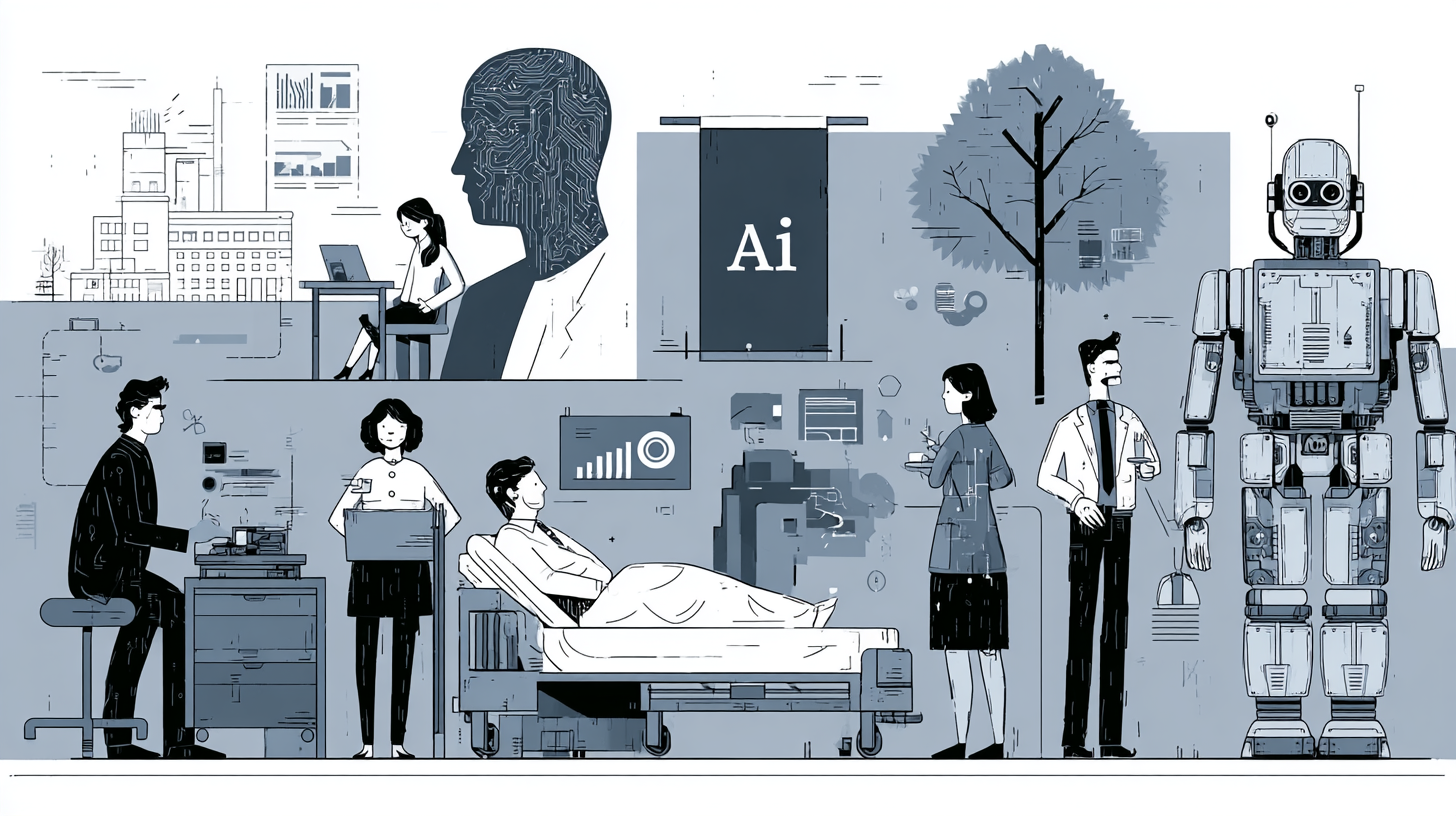
In healthcare, services ai is driving breakthroughs in diagnostics, patient care, and operational workflows. AI-powered imaging tools help physicians detect diseases earlier, while virtual assistants streamline patient scheduling and follow-ups. Hospitals use real-time monitoring for temperature and sleep quality adjustments, greatly improving patient outcomes.
Compliance remains a top priority, especially with regulations like HIPAA. Services ai platforms offer built-in data governance and automated incident response. This ensures sensitive health data stays protected and supports rapid innovation without compromising security.
AI-driven automation also relieves medical staff from repetitive documentation tasks. As a result, clinicians can focus more on patient care, increasing overall healthcare quality.
Financial Services and Insurance
Financial institutions are leveraging services ai to strengthen fraud detection, automate compliance, and enhance customer interactions. AI models analyze transaction patterns to flag suspicious activity instantly, reducing risk and loss.
Insurance companies are transforming claims workflows with AI, expediting decisions and improving user experience. For a deeper look, explore how AI-enhanced claims processing is shaping the future of insurance efficiency.
Services ai solutions also ensure adherence to strict regulations like PCI and SOX. Automated monitoring and reporting simplify audits and help maintain trust in financial services.
Manufacturing and Logistics
Manufacturers are embracing services ai to optimize production, predict equipment failures, and streamline supply chains. AI-driven predictive maintenance helps avoid costly downtime by identifying potential issues before they escalate.
Smart factories deploy services ai for quality control, using vision systems to inspect products in real time. Logistics companies benefit from AI-powered demand forecasting, ensuring inventory levels match market needs.
Workflow automation reduces manual errors, cuts operational costs, and improves delivery speed. Services ai is now an essential component of modern manufacturing strategies.
Government and Smart Cities
Governments and municipalities are using intelligent platforms to enhance citizen services, manage infrastructure, and improve public safety. AI-powered systems handle large volumes of service requests and automate responses, making city operations more efficient.
Smart cities integrate AI with IoT sensors to monitor utilities, traffic, and environmental conditions. Real-time analytics enable better decision-making for resource allocation and emergency response. According to McKinsey's research on smart cities, digital solutions powered by AI are creating more livable, sustainable urban environments.
Security is paramount, so AI solutions in government prioritize data privacy and compliance. These advancements help build more resilient, adaptive urban environments.
Retail and Customer Experience
Retailers are turning to services ai for hyper-personalized shopping experiences, inventory management, and omnichannel engagement. Recommendation engines analyze buying patterns to suggest products that match customer preferences.
AI chatbots and virtual assistants provide instant support, answering queries and guiding shoppers through purchase decisions. Services ai platforms also automate inventory tracking, preventing stockouts and overstocks.
Retailers benefit from data-driven insights, optimizing marketing campaigns and store layouts. With services ai, businesses can respond swiftly to trends, driving customer loyalty and higher sales.
Overcoming Challenges in AI Service Adoption
Adopting services ai across organizations is transformative, but not without hurdles. As more businesses seek to scale AI, unique challenges often slow progress or prevent them from realizing full value. Understanding these obstacles is the first step toward successful adoption.
Common Barriers and Risks
Despite the promise of services ai, organizations encounter several recurring barriers:
Talent shortages: There is a significant gap in professionals skilled in data science, AI engineering, and MLOps.
Organizational resistance: Change management is tough. Employees may fear job displacement or struggle to adapt to new workflows.
Data quality and integration issues: Legacy systems, fragmented data, and lack of standardized processes hinder smooth AI deployment.
Project risk and ROI uncertainty: Many companies launch pilot projects but fail to scale, struggling to demonstrate clear returns.
For example, by 2024, only a fraction of enterprises achieved measurable ROI from services ai investments. Integration with existing IT infrastructure can be especially complex, resulting in delays or abandoned projects. Without a clear roadmap, these risks multiply, making it harder to justify continued investment.
Strategies for Success
Overcoming these barriers requires a strategic, multi-pronged approach to services ai adoption:
Invest in training and capability building: Upskilling existing teams and fostering a culture of learning is critical for long-term success.
Partner with experienced managed AI providers: Collaborating with experts accelerates deployment and reduces risk. For an in-depth look at how organizations can navigate these challenges, see Artificial intelligence transformation at Lithe.
Establish clear governance: Defining policies for data management, ethical AI use, and compliance ensures transparency and accountability.
Implement dynamic roadmaps and regular performance reviews: Continuous measurement, feedback, and iteration help organizations course-correct and optimize results.
By focusing on these strategies, businesses can unlock the full value of services ai, turning early obstacles into stepping stones for innovation. With the right partnerships and a commitment to ongoing improvement, scaling AI becomes not just achievable but sustainable.
Future Trends and Predictions for Services AI in 2026
The next few years promise radical shifts in how organizations leverage services ai. As innovation accelerates, businesses must keep pace with new technologies and changing expectations. Let’s explore what the future holds for services ai by 2026.
The Rise of Autonomous AI and Hyperautomation
By 2026, autonomous systems will redefine the limits of services ai. Next-generation models will independently manage complex workflows, making decisions in real time. Hyperautomation will blend AI, RPA, and IoT, enabling smart factories, dynamic supply chains, and even self-optimizing retail environments.
For example, agentic AI is already transforming e-commerce and unified commerce, creating seamless customer journeys and adaptive operations. As described in AI and automation in 2026, the integration of multiple technologies is setting the stage for unprecedented efficiency. Services ai will underpin these advancements, ensuring reliability and scale.
AI Democratization and No-Code/Low-Code Solutions
Services ai is becoming accessible to more people than ever. No-code and low-code platforms allow business users and citizen data scientists to create, deploy, and manage AI models without deep technical expertise. This democratization means innovation is no longer limited to IT departments.
More teams can experiment, iterate, and launch AI solutions quickly. Services ai platforms will offer intuitive interfaces, prebuilt modules, and guided workflows. This shift accelerates digital transformation and empowers organizations to solve problems faster.
Evolving Regulatory and Ethical Landscape
As services ai adoption grows, new regulations will emerge to ensure responsible use. Transparency, fairness, and explainability will become non-negotiable standards for AI-driven systems. Global standards are evolving to address bias, privacy, and accountability.
Organizations will need to implement robust compliance frameworks. Services ai providers will play a key role, supplying built-in governance features and regular audits. Staying compliant will not only build trust but also protect long-term business value.
The Expanding Role of Managed AI Providers
Managed AI providers are set to become indispensable partners for enterprises using services ai. These providers will offer end-to-end solutions, from deployment to monitoring, helping organizations manage risk and maximize ROI.
White-glove service models will ensure continuous optimization, proactive incident response, and 24/7 support. As complexity increases, businesses will rely on expert providers to maintain the performance and security of their services ai investments.
Key Predictions for 2026
Looking ahead, several predictions stand out for services ai:
Over 50% of enterprises will use managed AI services.
AI-driven automation will become standard across most industries.
No-code and low-code solutions will dominate new AI deployments.
Compliance and ethical AI will be critical differentiators.
Services ai will continue to evolve, with providers delivering more integrated, adaptive, and scalable offerings.
Organizations that embrace these trends will lead the way in innovation and resilience.
As we’ve seen, harnessing AI in 2026 is about more than just adopting new tech—it’s about reimagining how you work, plan, and deliver real results. Whether you’re curious about managed AI platforms, want to scale agile practices, or need guidance on integrating AI into your operations, we’re here to help you turn strategy into outcomes. If you’re ready to explore what smarter, faster, AI-driven transformation could look like for your organization, let’s start the conversation together.
Contact us now to get started
