
GTM AI: Transforming Go-to-Market Strategy in 2026
Go-to-market teams face unprecedented complexity in 2026. Traditional approaches to customer acquisition, revenue growth, and market expansion no longer deliver the velocity businesses need. Enter GTM AI — a transformative approach that applies artificial intelligence to every stage of the go-to-market process, from lead generation to customer retention. This technology isn't just automating tasks; it's fundamentally redesigning how organizations plan, execute, and optimize their path to market. For businesses seeking competitive advantage, understanding and implementing GTM AI has shifted from optional to essential.
Understanding GTM AI and Its Strategic Impact
GTM AI represents the convergence of artificial intelligence with go-to-market strategy and execution. What GTM AI encompasses goes beyond simple automation, creating intelligent systems that can predict customer behavior, personalize outreach at scale, and optimize resource allocation across sales, marketing, and customer success functions.
The fundamental shift occurs when organizations move from reactive decision-making to proactive, data-driven strategies. These platforms analyze patterns across millions of customer interactions, identifying what works and what doesn't with a precision that human analysis simply cannot match.
Core Components of GTM AI Systems
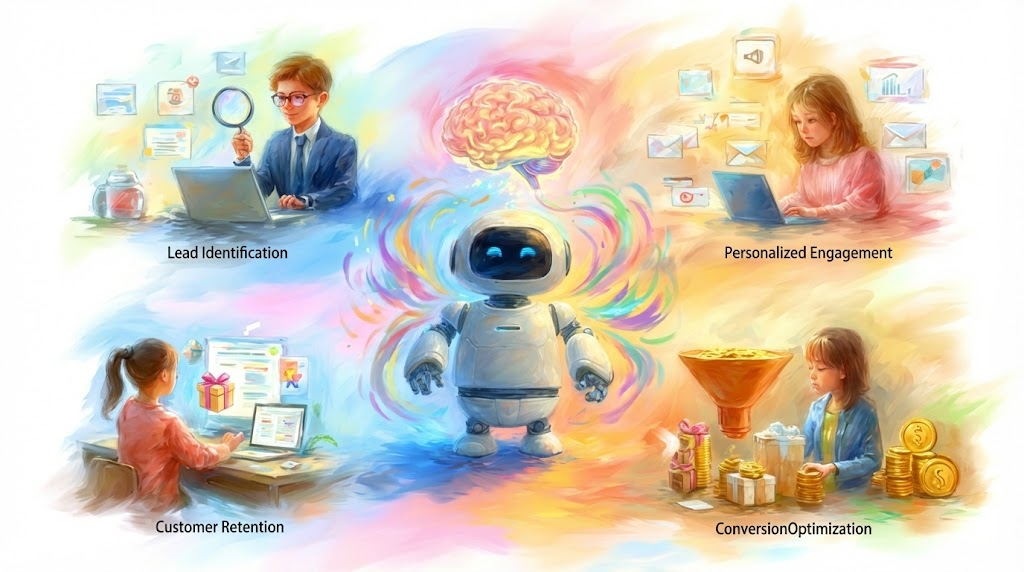
Modern implementations integrate several critical capabilities: predictive lead scoring that identifies high-value prospects before competitors do, automated content personalization that adapts messaging to individual buyer contexts, revenue forecasting with accuracy levels that transform pipeline planning, conversation intelligence that captures insights from every customer interaction, and workflow automation that eliminates repetitive tasks and accelerates velocity.
The Business Case for GTM AI Adoption
Organizations implementing GTM AI report transformational outcomes that extend well beyond incremental improvements. The shift represents a fundamental change in how go-to-market teams operate and deliver value.
Revenue impact typically manifests first. Teams using AI-powered personalization see conversion rates increase by 30–50% as messaging becomes precisely tailored to buyer needs and timing. Sales cycles compress when the system identifies the optimal moment for engagement and suggests the most effective approach.
Operational efficiency gains prove equally significant. Marketing teams that once spent 60% of their time on manual tasks redirect that effort toward strategy and creativity. Sales representatives focus on relationship-building rather than data entry, while customer success teams proactively address issues before they escalate.
The strategic advantage extends to resource allocation. These tools identify which markets, segments, and channels deliver the highest return, enabling organizations to concentrate investment where it matters most. This precision transforms marketing from a cost center into a predictable revenue engine.
Implementing GTM AI Across Your Organization
Successful implementation requires more than technology deployment. It demands a thoughtful approach that addresses both technical and cultural dimensions of transformation.
Phase One: Foundation Building
Start by assessing your current GTM infrastructure and identifying gaps. Most organizations discover that data quality represents the primary bottleneck. These systems require clean, structured data to generate accurate insights and predictions.
Establish clear objectives before selecting tools. Are you primarily focused on increasing pipeline velocity? Improving conversion rates? Reducing customer acquisition costs? Each goal may require different AI capabilities and integrations.
The GTM AI Academy offers structured programs that help teams build competency before full deployment, reducing implementation risk and accelerating time to value.
Phase Two: Strategic Integration
Integration with existing systems determines how effectively the platform delivers value. It must connect seamlessly with your CRM, marketing automation, customer success tools, and data warehouse.
GTM Engine's approach demonstrates how AI can transform existing CRM systems rather than requiring wholesale replacement. This strategy reduces disruption while maximizing the value of prior technology investments.
Consider these integration priorities:
Data flow automation between all customer-facing systems
Real-time synchronization to ensure AI operates on current information
Bidirectional communication so insights flow back into operational tools
API flexibility that accommodates future tool additions
The agile AI workflows that organizations need in 2026 require this level of technical sophistication combined with operational agility.
Phase Three: Team Enablement and Change Management
Technology alone doesn't drive transformation-people do. GTM AI succeeds when teams understand how to leverage AI insights within their daily workflows.
Training programs should focus on practical application rather than technical theory. Sales representatives need to understand how AI-generated insights improve their conversations, not how the algorithms work. Marketing teams require skills in prompt engineering and output refinement, not data science.
Change resistance often emerges from fear that AI will replace human roles. Address this directly by demonstrating how AI augments human capabilities rather than replacing them. The most effective GTM professionals in 2026 combine AI-powered insights with uniquely human skills like empathy, creativity, and strategic thinking.

GTM AI Applications Across the Revenue Lifecycle
The practical applications of GTM AI span every stage of the customer journey, creating value from initial awareness through expansion and renewal.
Demand Generation and Lead Acquisition
GTM AI transforms how organizations identify and attract potential customers. Rather than broad campaigns targeting generic personas, AI enables precision targeting based on intent signals, behavioral patterns, and predictive propensity models.
Modern systems analyze thousands of data points to identify companies entering the buying cycle. They detect changes in website behavior, content consumption patterns, technology adoptions, hiring trends, and competitive research activity-all signals that indicate purchase intent.
Content recommendations become hyper-relevant when AI understands individual prospect contexts. The system suggests which case studies, whitepapers, or webinars each prospect finds most compelling based on their industry, role, challenges, and journey stage.
Sales Enablement and Conversion Optimization
For sales teams, GTM AI functions as an always-available strategic advisor. Before every conversation, representatives receive briefings on prospect context, suggested talking points, likely objections, and recommended next steps.
Conversation intelligence captures insights from calls and meetings, identifying successful patterns and areas for improvement. New team members accelerate their learning curve by accessing what works across thousands of successful deals.
Copy.ai's GTM AI platform demonstrates how AI can generate pipeline by automating personalization at scale while maintaining the authentic voice that builds trust.
Pricing optimization represents another powerful application. AI analyzes which pricing structures, discount levels, and contract terms maximize both win rate and deal value for different customer segments.
Customer Success and Revenue Retention
GTM AI's impact extends well beyond initial sale. Customer success teams leverage AI to predict churn risk, identify expansion opportunities, and optimize onboarding experiences.
Predictive models identify customers at risk weeks or months before they would typically signal dissatisfaction. This early warning enables proactive intervention that often prevents churn entirely.
Expansion revenue opportunities become visible when AI detects usage patterns indicating readiness for additional products or services. Rather than generic upsell campaigns, recommendations align precisely with demonstrated customer needs.
Building GTM AI Capabilities: The Strategic Roadmap
Organizations approaching GTM AI implementation benefit from structured roadmaps that balance quick wins with long-term capability building.
Quick wins establish momentum and demonstrate value. Identify one high-impact, low-complexity use case for initial deployment. Email personalization, lead scoring enhancement, or sales battlecard generation often deliver fast results with minimal technical complexity.
Transformation engineering strategies help organizations balance immediate value delivery with sustainable capability development-a crucial dynamic in GTM AI adoption.
Measuring GTM AI Performance
Establish clear metrics before implementation to track progress and demonstrate ROI:
Pipeline velocity: time from lead creation to opportunity to closed-won
Conversion rates at each funnel stage
Average contract value and expansion revenue
Sales rep productivity measured in meaningful conversations per week
Customer acquisition cost and customer lifetime value ratios
Time saved on manual tasks across all GTM functions
Create dashboards that make performance visible to stakeholders. Transparency builds confidence and sustains investment in ongoing optimization.
Governance and Ethical Considerations
GTM AI raises important questions about data privacy, algorithmic bias, and appropriate use of automation. Establish governance frameworks before widespread deployment.
Data handling policies must comply with regulations like GDPR and CCPA while maintaining the data access AI systems require for effectiveness. Transparency with customers about how you use their data builds trust rather than eroding it.
Bias detection mechanisms should regularly audit AI outputs to ensure they don't inadvertently discriminate based on protected characteristics or perpetuate historical inequities.
Human oversight remains essential for high-stakes decisions. AI should inform and augment human judgment, not replace it entirely in contexts where ethical considerations and relationship dynamics matter.

The Future of GTM AI: Emerging Trends and Innovations
The GTM AI landscape continues evolving rapidly as new capabilities emerge and existing technologies mature. Understanding these trends helps organizations prepare for what's next.
Generalist Tool Models and Agent-Based Systems
Recent research into Generalist Tool Models demonstrates how AI systems can simulate external tools, enabling more sophisticated autonomous workflows. These models represent a significant leap toward AI agents that can independently execute complex GTM processes.
NewGTM.ai's consultancy approach focuses on strategic integration of these advanced capabilities, reimagining entire GTM motions around AI-first processes rather than simply automating existing workflows.
Unified Communication Platforms
The fragmentation of GTM tools creates inefficiency and data silos. Platforms like UnifyInbox consolidate multiple communication channels into single interfaces, reducing context-switching and improving response times.
This consolidation trend will accelerate as organizations recognize that tool proliferation undermines the velocity advantages GTM AI promises.
Predictive Market Intelligence
Next-generation GTM AI systems will predict market shifts before they become obvious, identifying emerging competitors, changing buyer preferences, and new distribution channels early enough to capitalize on opportunities.
These systems analyze signals across social media, news sources, patent filings, hiring patterns, and countless other data streams to detect meaningful patterns invisible to human analysis.
GTM AI Implementation Challenges and Solutions
Despite compelling benefits, GTM AI implementation presents real challenges that organizations must address strategically.
Data Quality and Integration Complexity
Poor data quality represents the most common implementation obstacle. AI systems trained on incomplete, inconsistent, or outdated data generate unreliable outputs that undermine trust.
Solution approaches include:
Conducting comprehensive data audits before AI deployment
Implementing data governance policies that maintain quality over time
Using AI itself to clean and enrich existing data sets
Establishing single sources of truth for critical data entities
Change Management and Adoption Resistance
Teams accustomed to existing workflows often resist new approaches, even when objectively superior. This resistance can derail otherwise well-designed implementations.
Effective transformation leadership addresses both rational concerns and emotional reactions to change. Involve team members early in planning, celebrate quick wins publicly, and provide ongoing support as new capabilities roll out.
Skill Gaps and Capability Building
GTM AI requires new skills that most teams don't currently possess. The gap between current capabilities and requirements can seem daunting.
Progressive capability building works better than attempting comprehensive training before deployment. Start with core users who develop deep expertise, then expand gradually as comfort levels increase. The investment in training and capability building pays dividends throughout the transformation journey.
Vendor Selection and Technology Lock-in
The GTM AI vendor landscape includes hundreds of solutions with overlapping capabilities and incompatible approaches. Choosing poorly creates costly migration challenges down the road.
Prioritize platforms with open APIs, strong integration ecosystems, and demonstrated commitment to interoperability. Avoid vendors whose business models depend on locking you into proprietary ecosystems.
Sector-Specific GTM AI Applications
Different industries face unique GTM challenges that AI addresses in distinct ways. Understanding sector-specific applications helps organizations identify relevant use cases.
Professional services firms leverage GTM AI to identify opportunities within existing client accounts, predict which prospects value specialized expertise, and optimize consultant utilization across engagements.
SaaS companies use AI to perfect product-led growth motions, identifying which user behaviors predict conversion and expansion while automating nurture sequences that guide free users toward paid plans.
Financial services organizations apply GTM AI to compliance-sensitive outreach, ensuring every communication meets regulatory requirements while still achieving personalization at scale. Understanding financial services digital transformation provides crucial context for these applications.
Manufacturing companies utilize AI to identify equipment replacement cycles, predict maintenance needs that create sales opportunities, and optimize territory assignments based on account potential and geographic efficiency.
Building Competitive Advantage Through GTM AI
Organizations that successfully implement GTM AI don't just improve efficiency-they build sustainable competitive advantages that compound over time.
Network effects emerge as AI systems improve with usage. Every customer interaction generates data that makes predictions more accurate and recommendations more relevant. Organizations with larger data sets and longer implementation histories develop AI capabilities competitors struggle to replicate.
Speed advantages allow AI-powered organizations to identify and respond to opportunities faster than rivals using traditional approaches. This velocity gap widens as AI systems optimize and competitors fall further behind.
Cost structure improvements create pricing flexibility that disrupts established markets. When GTM AI reduces customer acquisition costs by 40%, organizations can invest in growth, reduce prices, or improve margins-all strategic options unavailable to competitors with higher cost structures.
The rise of go-to-market engineers reflects how organizations build specialized roles that maximize AI leverage and create lasting capability advantages.
Integrating GTM AI With Broader Transformation Initiatives
GTM AI delivers maximum value when integrated with comprehensive transformation efforts rather than deployed in isolation. Organizations seeing the greatest returns connect GTM AI to their broader digital and agile transformations.
Agile methodologies provide the operational framework for rapid GTM AI experimentation and iteration. Teams organized around outcomes rather than functions can more easily adopt AI-powered workflows that span traditional departmental boundaries.
The connection between agile and AI becomes increasingly important as organizations build adaptive capabilities that respond to market changes in real-time.
Digital platforms provide the infrastructure GTM AI requires for data integration, workflow automation, and intelligent decision-making. Organizations with mature digital foundations implement AI faster and extract more value than those still operating on legacy systems.
Cultural transformation determines whether GTM AI becomes embedded in how the organization operates or remains a disconnected technology layer. Leaders must actively shape cultures that embrace experimentation, data-driven decision-making, and continuous learning.
GTM AI represents far more than incremental improvement to existing go-to-market processes-it's a fundamental reimagining of how organizations identify, engage, and serve customers. The competitive advantages flow to those who act decisively while this technology remains nascent. If your organization is ready to transform how you go to market, Lithe brings deep expertise in AI transformation, agile at scale, and strategic execution that turns vision into measurable results. We help you build the capabilities, culture, and systems that make GTM AI a sustainable advantage rather than a fleeting experiment.
