
Imagine waking up to a workplace where AI handles routine tasks and accelerates decisions, reshaping your team's daily experience. This is not a distant future—by 2026, organizations that master intelligent workflows with advanced AI will set the pace for innovation and adaptability.
This guide is designed for leaders and practitioners eager to unlock the power of AI-enhanced agile practices. You will learn how Agile principles are evolving in the AI era, discover new workflow models, and explore real-world strategies to boost productivity and future-proof your team.
Get ready to lead your organization into the next era of intelligent, adaptive work.
The Evolution of Agile: Why AI Changes Everything
Imagine teams moving at the speed of thought. With generative models now reducing development cycles from weeks to hours, this shift is not just about speed. It is about fundamentally changing how teams build, test, learn, and iterate.
AI is rapidly closing the gap between idea and execution. In this new landscape, traditional agile feedback loops are transformed. Teams no longer wait for the end of a sprint to gather insights. Instead, they validate hypotheses and pivot quickly, guided by real data and rapid experimentation.

The AI-Accelerated Feedback Loop
Intelligent automation brings a new pace to software development. Generative AI tools can produce working prototypes, test cases, and documentation in minutes. This acceleration means the feedback loop—build, test, learn, iterate—happens continuously, not just at the end of a sprint.
Teams are seeing dramatic reductions in cycle times. For example, Thoughtworks reports that clients adopting AI-first engineering have cut delivery cycles by up to 50 percent. Ken Ringdahl, CTO of Emburse, calls AI the greatest force multiplier in agile history. With these tools, teams can validate more hypotheses, run more experiments, and pivot faster than ever before.
However, speed brings new challenges. If agile practices do not evolve, faster work can quickly lead to chaos. Without clear processes, teams risk technical debt, miscommunication, and missed learning opportunities. Modern workflows make adaptability and rapid response even more critical.
Consider a team using AI to test product features. They can run multiple experiments in parallel, gather user feedback, and adjust direction in real time. This level of responsiveness puts a premium on transparency and continuous adaptation. The ability to learn quickly and act on that knowledge has become the new competitive edge.
Rethinking Agile Values and Principles for 2026
The core values of agile ai must evolve to keep pace with the technology. The original Agile Manifesto emphasized working software, collaboration, and responding to change. In 2026, the focus shifts from simply delivering output to achieving meaningful outcomes. Teams measure success by cycle time, lead time, and validated learning—not just velocity.
Learning itself is now a deliverable. Failed experiments are valuable, as they provide insights that guide future work. In agile ai environments, transparency, inspection, and adaptation must happen at a much faster cadence.
Sprint Reviews are also changing. Instead of just demonstrating working software, teams share what they have learned. High-performing teams prioritize learning milestones, using them as key indicators of progress.
A flexible, AI-native mindset is essential. Agile ai demands that teams move away from rigid frameworks and embrace adaptable processes. As highlighted in Agility Meets AI: The Future of Transformation, organizations that rethink their agile values can harness the full power of AI to innovate and thrive.
To summarize, agile ai is not just about automation. It is about reimagining how teams work, learn, and deliver value in a world where change is constant and speed is everything.
Designing Intelligent Workflows: Models and Best Practices
The future of intelligent work in 2026 depends on designing workflows that are flexible, transparent, and optimized for both people and AI. As organizations move toward an agile ai approach, traditional models are evolving to handle the unique demands of AI-driven projects. Let us explore how hybrid frameworks, new metrics, and human oversight create a blueprint for success.
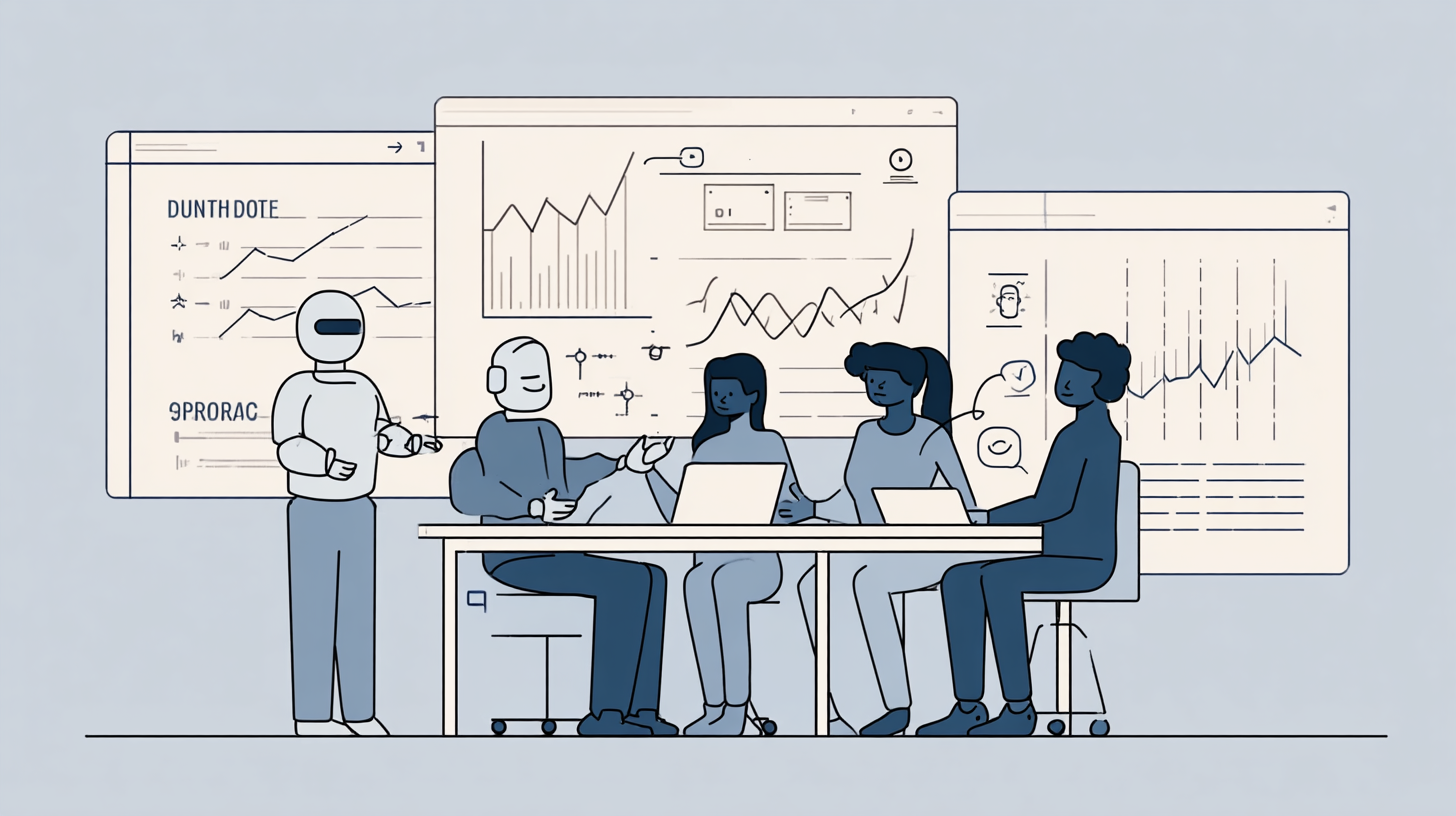
Hybrid Agile Models: From Fixed Sprints to Fluid Workflows
AI projects rarely fit neatly into fixed-length sprints. Data collection, model training, and research tasks are unpredictable and iterative. This is where a hybrid approach shines, blending the structure of sprints with the flexibility of Kanban-style continuous flow.
For exploratory AI work, teams often use Kanban to manage ongoing research and rapid experimentation. Meanwhile, well-defined engineering tasks—such as building user interfaces around AI models—benefit from traditional sprints. By matching the process to the nature of the work, hybrid models provide the agility that agile ai teams need.
A case study of teams using this hybrid approach found improved delivery and better alignment with unpredictable AI tasks. The benefits include:
Greater flexibility for handling changing priorities
Faster delivery on research and engineering tasks
Better collaboration between data scientists and developers
As highlighted in AI Delivery Isn't About Bots—It's About Better Workflows, intelligent workflow design is not just about automation, but about creating systems where humans and AI collaborate effectively. This is the essence of agile ai in action.
New Metrics for Agile AI Workflows
Traditional metrics like velocity often fail to capture the real value of agile ai teams. When AI automates coding or testing, measuring raw output becomes less meaningful. Instead, the focus shifts to cycle time (how long tasks take from start to finish) and lead time (from idea to production).
Agile ai teams now prioritize learning milestones as sprint goals. These milestones reward fast validation, even if a hypothesis is disproven. Sprint Reviews become forums for sharing insights and lessons learned, rather than just showcasing completed features.
Key Metrics for Agile AI Workflows:
Cycle Time: Measures speed of task completion
Lead Time: Tracks idea to production
Learning Milestones: Captures validated knowledge, even from failed experiments
Value Flow: Assesses how quickly value moves through the system
For example, a team may set a learning milestone to test a new AI model within two days. Whether the result is a breakthrough or a dead end, the insight is celebrated and shared. This approach supports continuous improvement within agile ai environments.
By measuring value flow and learning, not just speed, teams gain a deeper understanding of progress and can adapt quickly to new information.
Human-in-the-Loop: Ensuring Quality and Security
Unchecked AI automation can introduce technical debt, security vulnerabilities, and ethical risks. That is why human oversight remains a core part of any agile ai workflow. Teams must build in checkpoints for prompt engineering, code review, and integration to maintain quality.
For example, some teams use AI to generate test cases automatically, but require manual validation before deployment. This ensures accuracy and prevents flawed logic from slipping through. Setting clear ethical and security guardrails—such as preventing sensitive data from being exposed to public AI models—is essential.
Best Practices for Human-in-the-Loop:
Require human review for all critical AI outputs
Establish protocols for prompt engineering and validation
Involve legal and security experts in workflow design
# Example: Human-in-the-loop validation
def validate_ai_output(ai_output):
    if not human_review(ai_output):
        raise Exception("Manual review failed")
    return True
By embedding these practices, agile ai teams can safely leverage automation while retaining control and accountability. The result is a resilient workflow that balances innovation with trust.
The New Agile Team: Humans and AI as Collaborators
The agile ai revolution is transforming the fabric of modern teams. In 2026, collaboration is no longer just about people working side by side. AI has become a core member, fundamentally changing how work gets done and how teams interact. This shift requires leaders and practitioners to rethink their approach, ensuring that both humans and machines can contribute at their best.
Teams that succeed with agile ai are those that embrace this new partnership, leveraging AI’s strengths while maintaining human oversight and creativity. Let’s explore how these changes unfold in practice.

AI as a “Cybernetic Teammate”
In agile ai environments, AI is no longer just a tool used occasionally by developers or analysts. Instead, it operates as a true teammate, handling repetitive or data-heavy tasks and amplifying team productivity. This shift enables human team members to focus on strategy, creativity, and problem-solving.
Picture an agile ai team where AI acts as a pair-programming partner. Developers use AI to generate boilerplate code, suggest improvements, and automate tests. Product Owners rely on AI to analyze market trends or draft user stories, while Scrum Masters use AI-generated analytics to monitor team health and identify bottlenecks.
However, AI is not infallible. Teams must treat AI like a junior teammate, guiding its actions, reviewing its outputs, and providing feedback for continuous improvement. Agile ai teams that adapt to this mindset can pivot quickly, validate more hypotheses, and drive innovation faster than ever before.
The real advantage comes when AI and humans work in sync, each playing to their strengths. By integrating AI into daily standups, retrospectives, and decision-making, agile ai teams unlock new levels of speed and adaptability.
Changing Roles and Required Skills
With agile ai, traditional team roles evolve. Product Owners move beyond managing backlogs to become visionaries who use AI for market analysis and user story generation. Their work becomes more strategic, as AI handles routine prioritization and data gathering.
Scrum Masters transform from simple facilitators into strategic coaches. They leverage agile ai insights to identify process improvements and boost team morale. Developers shift from writing every line of code to architecting systems, reviewing AI-generated work, and mastering prompt engineering.
The need for new skills is clear. Agile ai demands that team members are fluent in prompt engineering, data interpretation, and critical review of AI outputs. According to Gartner, as many as 80% of engineers will need significant upskilling by 2027 to thrive in this landscape.
This evolution does not reduce the importance of human contribution. Instead, it amplifies the need for creativity, judgment, and ethical decision-making within agile ai teams. Continuous learning and adaptability become core team values.
Building Effective Human-AI Collaboration
Effective agile ai collaboration relies on clear protocols and a culture of trust. Teams must invest in training for prompt engineering and AI literacy, ensuring everyone can communicate effectively with AI systems. Establishing validation steps for AI-generated work is crucial, especially when dealing with code, content, or data that affects customers.
Psychological safety remains a top priority. Agile ai teams need open communication channels where members can question AI outputs, share concerns, and learn from mistakes. Building shared libraries of successful prompts and best practices helps teams continuously improve.
Balancing automation with human judgment is key. While AI can accelerate many tasks, final decisions should always involve human review. Teams that regularly review their collaboration practices and adapt based on feedback see greater success.
For deeper insights and real-world best practices, the Human-AI Collaboration in Agile Teams workshop offers valuable perspectives on integrating AI assistants into agile workflows, highlighting both opportunities and challenges.
The future belongs to agile ai teams that blend human intuition with machine intelligence, creating workplaces that are more innovative, resilient, and adaptable.
Estimating Work in the AI Era: A New Framework for User Stories
As teams embrace agile ai, traditional estimation techniques are being put to the test. The introduction of AI into agile workflows changes the nature of user stories, effort, and even what success looks like. To keep pace, organizations need a fresh approach to estimation that reflects the realities of AI-augmented work—where speed, complexity, and uncertainty are redefined.

The Story Point Dilemma in AI-Driven Work
Estimation has always been at the heart of agile ai, helping teams plan, prioritize, and deliver value predictably. But as AI automates more coding and routine tasks, the meaning of effort and complexity shifts.
In traditional agile ai environments, story points reflect the estimated effort, complexity, and uncertainty of a task. When AI can generate code, automate documentation, or suggest test cases in seconds, the "effort" component drops dramatically. However, the work does not disappear. Instead, the challenge moves to reviewing, validating, and integrating AI-generated outputs. For example, while an AI can write a function, a developer must still ensure it aligns with business rules and integrates seamlessly.
This creates a dilemma for agile ai teams. Assigning story points based on manual effort alone underestimates the real complexity. At the same time, ignoring AI's impact risks overestimating velocity and underplanning for review time. The result is a need to rethink what story points mean in an AI-driven context.
Teams have reported that while AI accelerates delivery, it also introduces new types of uncertainty—such as unpredictable output quality or integration challenges. Estimating these factors accurately is now a top priority for agile ai practitioners.
Three-Tiered User Story Framework
To address these challenges, leading agile ai teams are adopting a three-tiered user story framework. This structure recognizes the spectrum of work in AI-enhanced environments and aligns estimation with the true nature of the task.
The tiers are:
Zero-Point Stories: Fully automated by trusted AI systems, requiring no human review. Example: AI updates documentation via CI/CD.
Review & Integration (R&I) Stories: Tasks where AI generates output but humans must prompt, review, or integrate. Example: AI writes code, developer validates and merges.
Standard User Stories: Human-led, creative, or strategic tasks. Example: stakeholder workshops or complex architectural decisions.
Here is a table summarizing the story tiers:
This framework helps agile ai teams map tasks to the right estimation method. It also enables more accurate sprint planning and clearer communication. As highlighted in recent Gartner research, evolving estimation frameworks are central to sustaining performance in AI-driven teams. For more on this, see How Agile and AI Engineering Practices Impact Model Performance.
Practical Estimation Techniques for AI-Enhanced Teams
With the three-tiered approach, agile ai teams can tailor estimation to each type of work. For R&I stories, techniques like Planning Poker remain valuable. However, the focus shifts from raw effort to the complexity of prompts, risk of AI errors, and the integration effort required.
Estimation meetings should include discussions about AI unpredictability. Is the AI output reliable? How much review is needed? Teams often refine their estimates as they learn more about the AI's strengths and weaknesses. This adaptive mindset is crucial for agile ai success.
Some teams track productivity gains from AI assistants, reporting 20–55% improvements. However, they also note that quality assurance and integration are the new bottlenecks. To stay ahead, it's essential to measure not just speed, but learning milestones and value flow.
Ultimately, agile ai estimation is about balancing AI speed with human insight. By embracing new frameworks and continuous adaptation, teams can plan smarter, deliver faster, and maintain high standards.
Implementing Agile AI: Step-by-Step Playbook for 2026
The journey to mastering agile ai workflows in 2026 is both exciting and challenging. To help teams thrive, here’s a practical, five-step playbook designed for real-world adoption. Each step builds on agile ai principles, ensuring your organization stays ahead as automation and intelligence become the new normal.
Step 1: Start Small with High-Value Automation
Begin your agile ai transformation with focused, low-risk wins. Identify repetitive tasks that drain time but add little creative value. These are ideal candidates for initial automation, such as:
Generating test data or draft documentation
Summarizing meeting transcripts
Automating basic reporting
Quick wins build trust and momentum. For more detailed guidance, see How to Integrate AI into Agile Transformation. By starting small, teams can experiment safely and demonstrate measurable benefits of agile ai.
Step 2: Master Structured Prompt Engineering
Prompt engineering is the new superpower for agile ai teams. Train your team in crafting clear, effective prompts using frameworks like “Role, Task, Context, Expectation.” Encourage collaboration by building a shared prompt library and refining prompts together.
Teams should iterate on prompts to improve AI output quality, just as they iterate on code. This skill will become foundational as agile ai expands into every workflow.
Host prompt engineering workshops
Share best practices in team channels
Maintain a living prompt library
Step 3: Reinforce Quality and Security with Human Oversight
Unchecked automation can introduce risk, so agile ai demands robust human oversight. Set clear checkpoints where humans review all AI-generated work. Combine AI-driven testing and vulnerability scanning with mandatory manual approvals.
Implement strict data privacy and security protocols
Involve legal and security experts in workflow design
Validate outputs before production release
Human-in-the-loop safeguards ensure that agile ai delivers high-quality, secure results. Teams must always have the final say on sensitive or business-critical outputs.
Step 4: Continuously Measure and Adapt
Agile ai thrives on feedback and adaptation. Replace old metrics with those that reflect new realities, like cycle time, lead time, and learning milestones. Use AI analytics to uncover process bottlenecks and improvement areas.
Regularly review workflows with your team. Adapt based on what works and what doesn’t. For advanced strategies, explore research on Optimizing Agentic Workflows using Meta-tools, which can help streamline your agile ai processes.
Sprint reviews should focus on learnings and pivots, not just output. This mindset keeps agile ai teams nimble and resilient.
Step 5: Upskill Teams and Foster an Agile AI Culture
Invest in your people. Agile ai success depends on a culture of continuous learning, experimentation, and psychological safety. Offer training in AI literacy, prompt engineering, and collaborative skills.
Run regular AI learning sessions
Celebrate experiments, even when they “fail”
Encourage open dialogue about AI’s impact
Teams that embrace change and support one another will lead in the agile ai era. Building confidence and capability ensures your organization thrives as technology evolves.
Real-World Examples and Case Studies: Agile AI in Action
The shift to agile ai is not just theoretical. Across industries, organizations are reimagining their workflows and team structures to harness AI and agile together. With AI adoption now reaching 97% of software development organizations, according to AI Reaches 97% of Software Development Organizations, the need for evolved agile practices has never been greater.
Thoughtworks Clients: Cycle Times Cut by 50%
Several Thoughtworks clients embraced an agile ai approach, prioritizing AI-first engineering. By embedding generative AI into their development pipelines, these teams reduced cycle times by up to 50%. They rapidly tested hypotheses, iterated on user feedback, and delivered continuous value. Agile ai enabled teams to experiment more often, learn quickly, and avoid costly missteps.
Hybrid Agile-Kanban for AI Research and Delivery
AI projects often defy traditional sprint boundaries due to unpredictable research, data gathering, and model training. One product development team combined Kanban for research tasks with Scrum sprints for UI and integration work. This hybrid agile ai model gave them flexibility in discovery while maintaining delivery cadence for customer-facing features. As explored in Agile and AI: Partners or Foes, blending agile with AI workflows unlocks new levels of adaptability and innovation.
Product Owner: From Backlog Manager to Strategic Visionary
A global fintech company’s Product Owner leveraged agile ai to analyze thousands of customer feedback items and generate user stories. AI tools synthesized market trends and suggested feature priorities. This shift allowed the Product Owner to focus on strategic vision and stakeholder engagement, rather than manual backlog grooming. Agile ai made data-driven decision-making part of daily operations.
Scrum Master: Data-Driven Retrospectives
Scrum Masters are using agile ai analytics to guide team retrospectives. For example, one team automated the collection of sprint metrics, sentiment analysis of standup notes, and identification of process bottlenecks. The Scrum Master reviewed AI-generated insights with the team, leading to more targeted improvements and higher morale. Agile ai not only increased transparency but also empowered continuous adaptation.
Developer: AI-Driven Productivity and Focus
Developers are among the biggest beneficiaries of agile ai. At a leading SaaS provider, AI assistants generated boilerplate code and unit tests, freeing developers to focus on system architecture, integration, and critical review. This shift reduced manual effort, but made human oversight and code quality checks even more vital. Agile ai thus elevated the developer’s role to architect and integrator.
Three-Tier User Story Framework in Practice
One organization implemented a three-tier user story framework to estimate agile ai work more accurately. Automated tasks were tagged as “zero-point” stories, review and integration tasks as “R&I,” and creative or strategic work as standard stories. This structure improved predictability and resource allocation. Teams could now better balance AI automation with essential human contributions.
Lessons Learned: Human-in-the-Loop and Upskilling
Across these cases, several lessons stand out. Human-in-the-loop validation is essential for quality and security. Teams must continuously adapt workflows as AI capabilities evolve. Upskilling in prompt engineering and AI literacy is now a core part of agile ai success. The most effective organizations foster a culture of experimentation, transparency, and rapid learning, ensuring their teams remain future-ready.
If you’re inspired by the possibilities of Agile and AI working together and you’re ready to see real change in how your team plans, builds, and delivers, you don’t have to go it alone. At Lithe Transformation, we’ve helped organizations just like yours redesign workflows, automate intelligently, and upskill teams for the future. Whether you’re looking to embed new ways of working, strengthen your strategy, or unlock the full potential of AI in your day-to-day, we’re here to help you move from vision to measurable results.
Contact us now to get started
