
7 Essential AI Engineering Products Transforming 2026
The pace of innovation in AI engineering is skyrocketing, setting the stage for 2026 to be a defining year for organizations seeking to stay ahead.
In this article, we dive into seven essential ai engineering products that promise to reshape industries and revolutionize business operations. You’ll find a detailed analysis of each product’s pricing, features, benefits, target users, and the real-world results they deliver.
Ready to discover tools that could unlock your next leap forward? Get inspired by industry-changing solutions, see how they can drive value across sectors, and gain insights you can act on today.
New to this space? Start with our explainer on what GTM engineering means — the role that's driving adoption of these tools.
The Evolving Landscape of AI Engineering in 2026
The world of ai engineering products is moving at breakneck speed, and 2026 is shaping up to be a landmark year. Organizations across every sector are racing to adopt smarter, more integrated solutions. This surge is not just about innovation, it is about survival and staying ahead in a hyper-competitive market.
Accelerating Growth in AI Engineering
AI engineering products are now central to business transformation. The market is projected to surpass $80 billion by 2026, according to Gartner, as adoption rates skyrocket. Companies are not just experimenting, they are deploying these tools at scale for automation, analytics, and critical decision support.
Organizations see tangible results, from faster customer service to predictive maintenance in manufacturing. As these products mature, they offer more reliability and real-time insights, making them indispensable for digital-first enterprises.
Key Trends Shaping 2026
Several trends are driving the evolution of ai engineering products. Democratization is making advanced AI accessible to non-technical teams with low-code and no-code tools. Edge AI is pushing intelligence closer to where data is generated, enabling instant responses in fields like healthcare and retail.
For enterprise leaders navigating these trends, our guide to agile AI workflows for 2026 breaks down how to operationalise AI within existing delivery structures.
Explainable AI is taking center stage, helping businesses build trust with transparent, auditable models. Security and ethical considerations are top priorities as well, with organizations demanding robust governance and compliance features.
Bridging Challenges with AI Engineering Products
Despite the promise, companies face hurdles with ai engineering products. Skills gaps persist, integration with legacy systems can be complex, and data privacy is more critical than ever. About 60% of CIOs list integration as their biggest concern when deploying AI, reflecting the need for seamless, scalable solutions.
Essential ai engineering products are stepping in to bridge these gaps. They streamline deployment, simplify management, and offer built-in compliance features. As highlighted in AI and Automation in 2026, these innovations are not only solving technical problems but also driving real business outcomes, from cost savings to improved agility.
Expert Insights and Industry Impact
Industry leaders agree that ai engineering products are quickly becoming the backbone of digital transformation. Companies that invest in integrated, secure, and scalable platforms are seeing faster returns and greater resilience. The next wave will focus on even tighter integration, smarter automation, and ethical AI frameworks.
Looking ahead, the ability to leverage advanced ai engineering products will set the pace for innovation. As organizations adapt, those with the right AI tools will lead the way in shaping the future of business and technology.
7 Essential AI Engineering Products Transforming 2026
The rapid evolution of ai engineering products is reshaping how organizations operate in 2026. Companies now rely on innovative solutions to gain a competitive edge, streamline processes, and unlock new value. Below, we analyze seven standout ai engineering products that are setting new industry standards, each with unique strengths and real-world impact.
1. DataRobot AI Platform
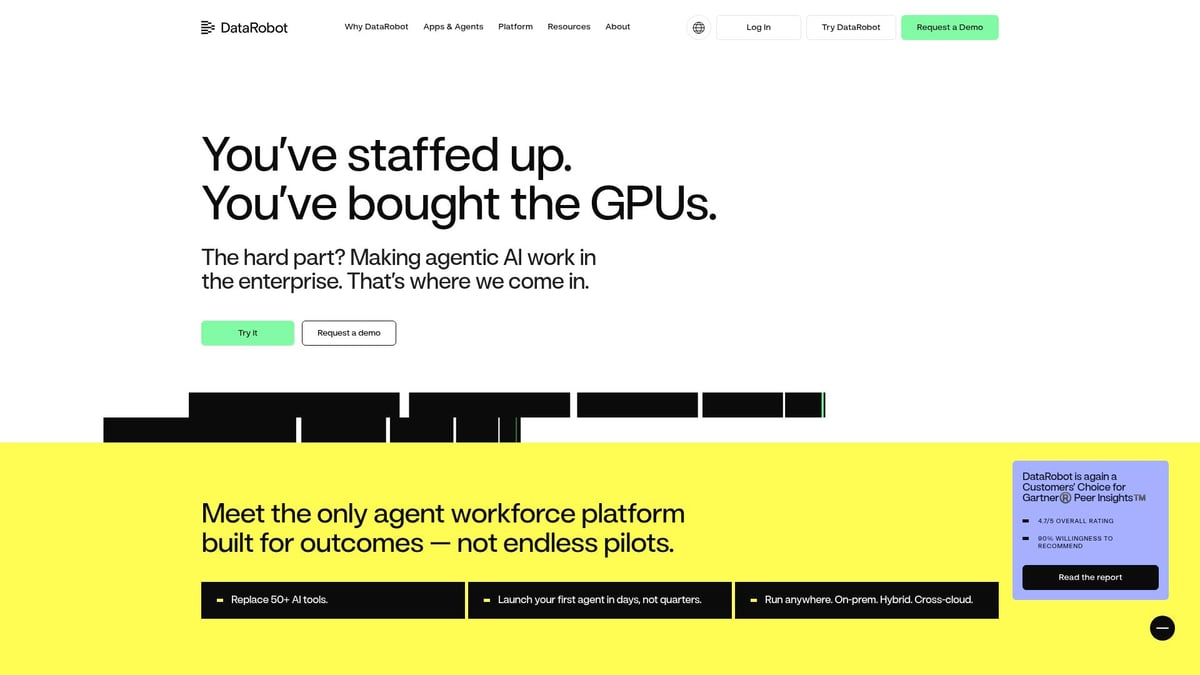
DataRobot AI Platform is a leading force among ai engineering products in 2026, offering a robust, enterprise-ready solution for end-to-end AI lifecycle management.
Pricing:
Subscription-based, custom pricing for enterprises.
Free trial available for evaluation.
Core Features:
Automated machine learning (AutoML)
MLOps for model deployment
Model monitoring and governance
Data preparation and feature engineering
Scalable cloud infrastructure
Benefits:
Accelerates AI development cycles
Reduces manual workload for data teams
Ensures model compliance and governance
Supports collaborative workflows
Target Audience:
Enterprises seeking scalable ai engineering products
Data scientists and business analysts
IT leaders focused on automation
Use Cases:
Predictive analytics in finance
Healthcare diagnostics and patient risk scoring
Retail demand forecasting
Pros:
Comprehensive automation suite
Strong compliance features
Scalable for large organizations
Cons:
Steep learning curve for new users
Higher costs may not suit small businesses
DataRobot’s blend of automation and governance makes it a go-to among ai engineering products for enterprises prioritizing reliability and speed.
2. Google Vertex AI
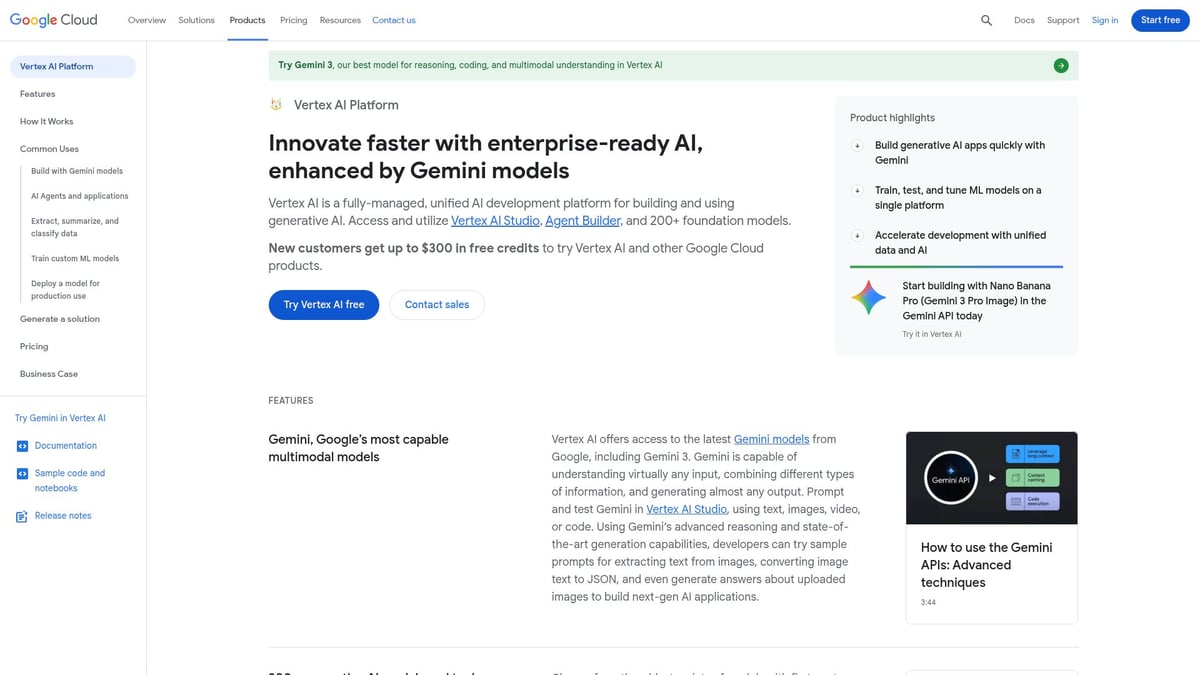
Google Vertex AI is redefining the landscape of ai engineering products by providing a unified, cloud-native platform for building, deploying, and scaling AI models.
Pricing:
Pay-as-you-go, based on compute and storage usage.
Core Features:
Unified AI workspace
AutoML for fast model development
Custom model training with managed datasets
Integrated MLOps and workflow automation
Seamless integration with Google Cloud services
Benefits:
Simplifies AI model building and deployment
Offers extensive pre-trained models
Enables real-time predictions and analytics
Ensures data security and compliance
Target Audience:
Enterprises and startups
Developers and data engineers
Teams already invested in Google Cloud
Use Cases:
Real-time recommendation engines for ecommerce
Fraud detection in financial services
Language processing and translation
Pros:
Highly scalable infrastructure
Strong security protocols
Rich library of pre-built AI solutions
Cons:
Complex for those unfamiliar with Google Cloud
Costs can rise significantly at large scale
Google Vertex AI stands out among ai engineering products for its integration and scalability, meeting the needs of organizations with diverse AI requirements.
3. Lithe Transformation AI Engineering Services
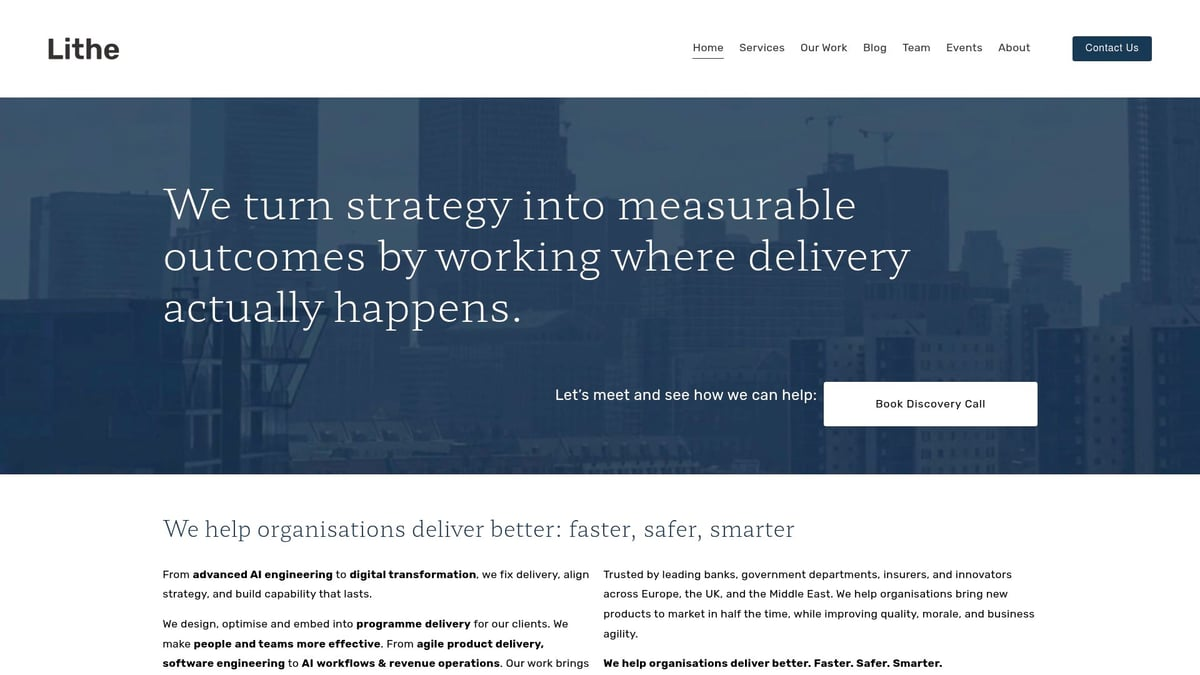
Lithe Transformation provides tailored ai engineering products and services that help organizations build sustainable AI-driven transformation strategies.
Pricing:
Custom engagement based on organizational needs
Discovery call required for scoping and pricing
Core Features:
Bespoke AI engineering and workflow automation
Custom large language model (LLM) integration
End-to-end digital transformation strategy
Agile delivery and optimization
Benefits:
Accelerates project delivery
Reduces operational costs
Builds long-term, sustainable AI capabilities
Aligns AI strategy with measurable business outcomes
Target Audience:
Large enterprises and public sector organizations
Financial services and regulated industries
Companies seeking comprehensive digital and AI transformation
Use Cases:
Workflow automation in back-office processes
Decision support for executives
Agile transformation and product innovation
Pros:
Deep industry expertise
End-to-end service offering
Proven track record with custom solutions
Cons:
Not a plug-and-play product
Requires consultation and organizational commitment
Focused primarily on enterprise clients
See how we've applied these capabilities in banking with our case study on building an AI Centre of Excellence
For those interested in real-world examples of successful AI transformation, explore these AI Transformation Success Stories to see the impact of tailored ai engineering products in action.
4. Microsoft Azure Machine Learning
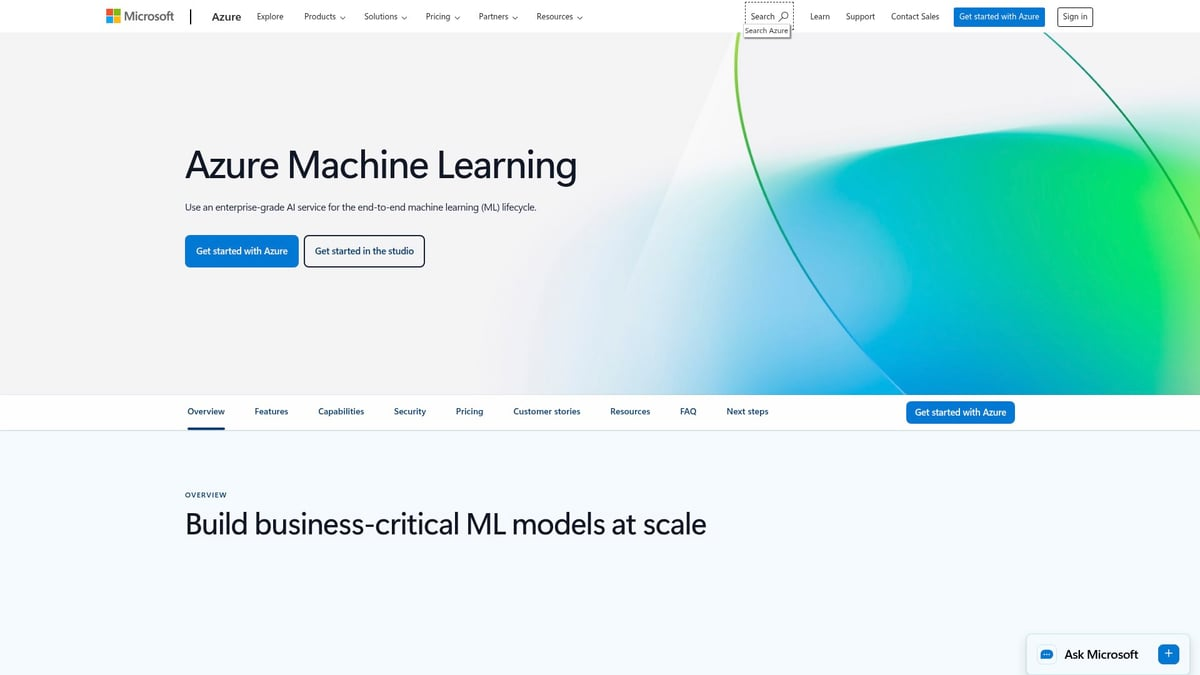
Microsoft Azure Machine Learning is a powerhouse among ai engineering products, delivering enterprise-grade tools for model development and deployment.
Pricing:
Pay-as-you-go, tiered by resources and usage
Core Features:
Automated machine learning (AutoML)
Drag-and-drop designer for workflows
Model management and monitoring
Responsible AI and fairness tools
Integration with Azure cloud services
Benefits:
Streamlines model development and deployment
Ensures strong security and compliance
Supports hybrid and multi-cloud environments
Target Audience:
Enterprises and IT teams
Developers and data scientists
Organizations in regulated sectors
Use Cases:
Risk modeling for insurance and finance
Customer segmentation in marketing
Supply chain optimization
Pros:
Enterprise-grade security
Flexible deployment options
Integration with existing Azure tools
Cons:
Requires familiarity with Azure ecosystem
Complex pricing structure can be challenging to estimate
Azure Machine Learning continues to set the standard for secure and scalable ai engineering products in 2026.
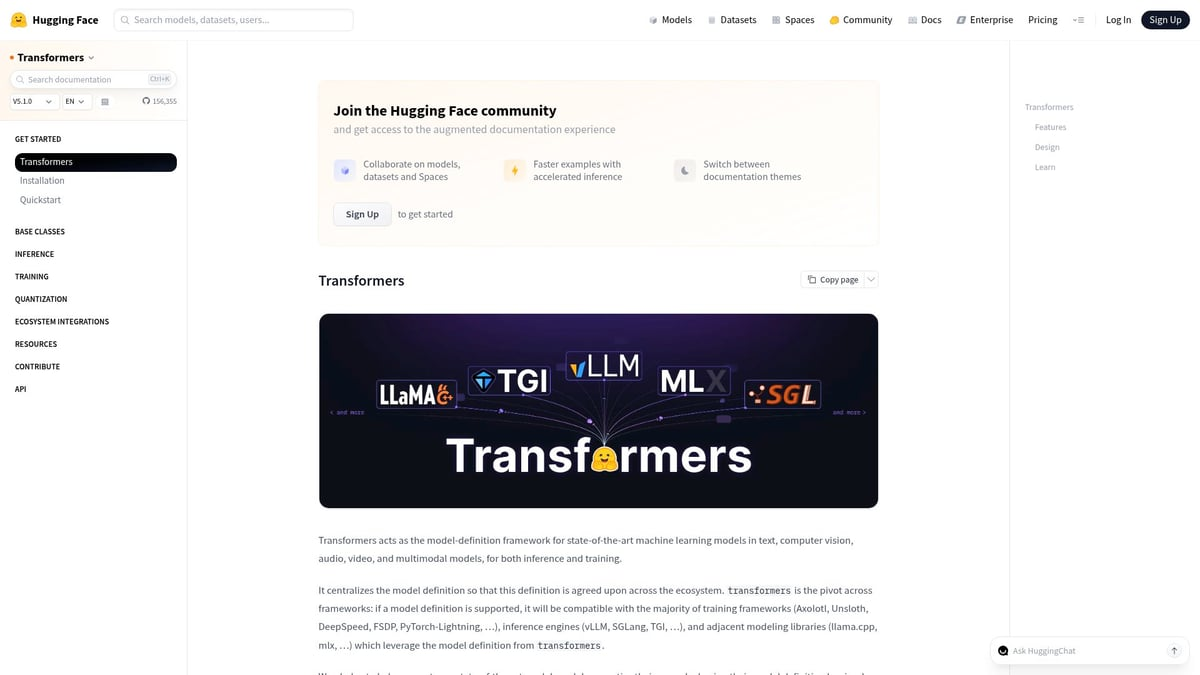
5. Hugging Face Transformers
Hugging Face Transformers is a leading open-source library, democratizing access to advanced NLP and AI capabilities among ai engineering products.
Pricing:
Open source, free for most applications
Paid enterprise and hosted API plans available
Core Features:
Extensive repository of pre-trained transformer models
NLP pipelines for rapid prototyping
Collaborative model hub
Easy integration with Python and other frameworks
Benefits:
Lowers the barrier to entry for NLP innovation
Enables quick development and testing
Supported by a large, active open-source community
Target Audience:
Developers and researchers
Startups and enterprises focused on NLP
Organizations needing custom language solutions
Use Cases:
Chatbots and conversational AI
Sentiment analysis for social media
Document summarization and translation
Pros:
Free and open-source for most uses
Huge library of models and contributors
Rapid innovation cycles
Cons:
Requires coding and technical expertise
Some enterprise features require a paid plan
Hugging Face Transformers has become a staple among ai engineering products, especially for teams prioritizing speed and innovation in NLP.
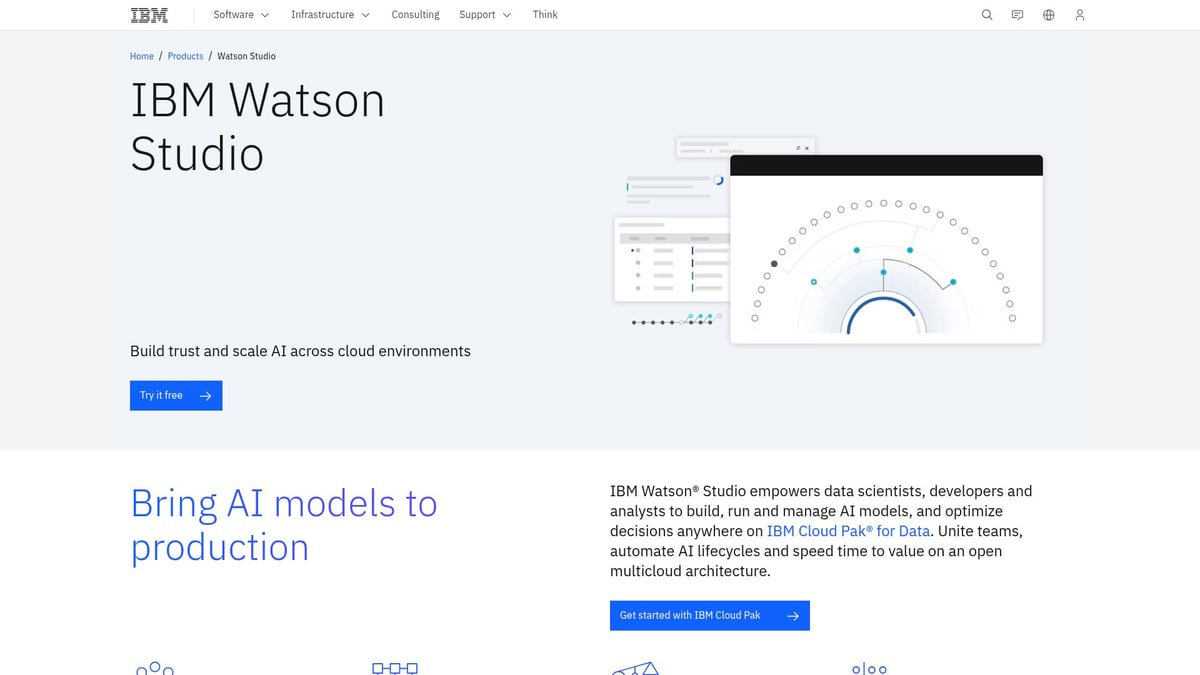
6. IBM Watson Studio
IBM Watson Studio delivers a collaborative environment for building, training, and deploying AI models, cementing its place among enterprise ai engineering products.
Pricing:
Free tier available
Pay-as-you-go and enterprise plans
Core Features:
Collaborative model development
Automated AI (AutoAI) for model selection
Data visualization and exploration tools
Seamless deployment to IBM Cloud
Benefits:
Facilitates teamwork across data science projects
Automates data preparation and model selection
Supports open-source frameworks (TensorFlow, PyTorch)
Target Audience:
Enterprises and analytics teams
Data scientists and business analysts
Use Cases:
Predictive maintenance in manufacturing
Customer insights and segmentation
Financial modeling and forecasting
Pros:
Strong security and compliance
Hybrid cloud support
Integrated data tools for collaboration
Cons:
User interface can be overwhelming
Full feature set requires IBM Cloud
IBM Watson Studio stands out among ai engineering products for its collaborative approach and focus on enterprise-grade security.
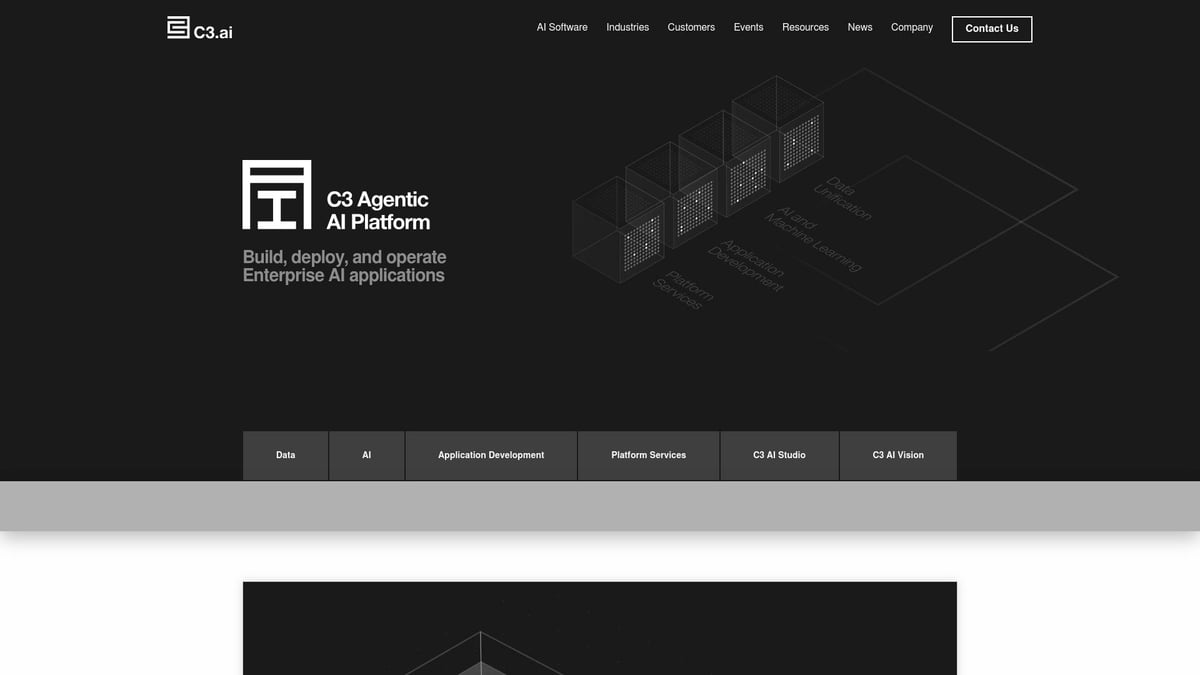
7. C3 AI Suite
C3 AI Suite is purpose-built for large-scale industrial and enterprise applications, making it a top choice among ai engineering products in mission-critical environments.
Pricing:
Custom pricing, tailored for enterprise needs
Quote required for implementation
Core Features:
End-to-end AI application development
Data integration from multiple sources
Model management and monitoring
Scalable for industrial deployment
Benefits:
Designed for large-scale, mission-critical applications
Rapid deployment and industry-specific modules
Robust security and compliance measures
Target Audience:
Large enterprises and industrial sectors
Energy, manufacturing, utilities
Use Cases:
Asset optimization in energy
Predictive maintenance for industrial equipment
Supply chain and logistics management
Pros:
Highly scalable and robust
Strong integration with enterprise systems
Industry-focused modules
Cons:
High price point
Complex initial setup
Best suited for large organizations
C3 AI Suite exemplifies the kind of ai engineering products that enable digital transformation at scale, supporting the needs of modern industry.
Key Selection Criteria for AI Engineering Products in 2026
Selecting the right ai engineering products in 2026 requires a strategic approach. With the market projected to reach over $281.47 billion by 2034, organizations must navigate a complex landscape to find solutions that deliver true value.
What Should You Look for in AI Engineering Products?
When evaluating ai engineering products, start by considering scalability. Can the product grow with your business and handle increasing data volumes? Security is equally vital, especially for industries managing sensitive information.
Integration capabilities should be top of mind. Your chosen solution must connect seamlessly with your existing tech stack. Governance features help maintain regulatory compliance and ensure responsible AI use. Support and cost are also crucial, as robust vendor assistance and transparent pricing can make or break your AI journey.
Industry Priorities: What Matters Most?
Different industries value distinct features in ai engineering products. For instance, healthcare organizations often prioritize compliance and data privacy, while retail businesses seek rapid deployment and real-time insights.
A recent survey found that 60% of CIOs view integration as their top concern when adopting new AI solutions. Open-source options offer flexibility and community-driven innovation, whereas enterprise products emphasize security, support, and reliability. Understanding your sector’s unique needs will help you focus on what matters most.
A Practical Checklist for AI Engineering Product Selection
To streamline your decision-making, use this checklist when comparing ai engineering products:
Does the product scale with your business?
How does it handle data privacy and security?
Can it integrate with existing systems easily?
Are governance and compliance tools included?
What support and training resources are available?
Is pricing transparent and flexible?
Engage stakeholders early and review vendor reputation and user community. For a deeper dive into integrating AI with agile workflows, explore Agility Meets AI for Transformation.
A financial services firm recently succeeded by aligning their AI product choice with business goals, prioritizing integration and strong governance. Their experience highlights the importance of a thorough, criteria-based selection process for lasting digital transformation.
Future Trends and Innovations in AI Engineering Products
The future of ai engineering products is unfolding rapidly, with new trends and innovations set to reshape industries in the coming years. As technology advances, organizations must keep pace or risk falling behind.
Emerging Technologies Reshaping AI Engineering
These innovations are not only technical milestones. They also address real-world business needs for privacy, speed, and adaptability. For a deeper dive into how these trends will shape digital transformation, see AI and Digital Transformation Trends.
Ethics, Regulation, and Industry-Specific Solutions
As ai engineering products become more powerful, ethical considerations and transparency are moving to the forefront. Organizations are focusing on responsible AI, ensuring systems are fair, unbiased, and explainable. Regulatory frameworks are evolving in parallel, guiding product development and deployment.
Pricing models are also changing. More vendors are moving toward subscription and consumption-based pricing, allowing businesses to scale investments based on usage. Industry-specific solutions are emerging, offering tailored capabilities for sectors like healthcare, finance, and manufacturing.
According to IBM's predictions on AI and tech trends for 2026, the next wave of ai engineering products will emphasize trust, security, and adaptability. Early adopters are already leveraging these tools to gain a competitive edge.
Looking Ahead
The landscape for ai engineering products will continue to evolve, shaped by technological breakthroughs and changing business demands. Staying informed about these trends is essential for organizations aiming to remain competitive and innovative.
As we’ve explored, the future of AI engineering is all about choosing solutions that fit your unique needs, drive real results, and keep your business ahead of the curve. Whether you’re seeking to automate workflows, scale agile practices, or integrate AI into every layer of your organization, the right strategy can make all the difference. If you’re ready to turn these insights into action and want expert guidance on your transformation journey, Contact us now to get started. Let’s work together to shape a smarter, faster, and more innovative 2026 for your team.
Looking for help choosing and implementing these tools? Explore our AI engineering services or book a discovery call to discuss your needs.
