
Digital Transformation Case Study Guide: Strategies for 2026
As organizations race toward 2026, the urgency to lead in digital transformation has never been greater. The stakes are high, with rapid technological shifts and evolving customer demands reshaping every industry.
This guide delivers a practical digital transformation case study approach, providing actionable strategies, proven frameworks, and real-world insights. Leaders and teams will find a comprehensive playbook for planning, executing, and measuring transformation success.
Explore step-by-step methods for building a case study-driven strategy, discover key trends for 2026, review best practices, and learn from organizations that have transformed successfully. Your digital future starts here.
Understanding Digital Transformation in 2026
Digital transformation is no longer a buzzword, it is the foundation for organizational survival and growth as we approach 2026. Companies across every sector are racing to adapt, and a well-structured digital transformation case study can reveal what sets leaders apart from laggards. To thrive in this fast-evolving landscape, understanding how digital transformation has changed and what trends will shape its future is essential.

Defining Digital Transformation and Its Evolution
Digital transformation refers to the strategic adoption of digital technologies to fundamentally change business models, operations, and customer experiences. It differs from digitization, which means converting analog information into digital formats, and from digitalization, which involves improving processes using digital tools.
The digital transformation case study approach helps organizations see how these concepts have played out in practice over time. Since the 2010s, digital transformation has evolved from simple website launches to full integration of AI, automation, and data-centric operations. Customer experience became a core focus, and companies started to reimagine how they deliver value.
Key drivers include rapid technological advancements, changing consumer expectations, and new regulatory demands. The COVID-19 pandemic served as a catalyst, accelerating digital initiatives and forcing many organizations to rethink their strategies overnight.
A compelling example is Walmart’s journey. Once known for brick-and-mortar retail, Walmart has become an omnichannel leader by investing in e-commerce, mobile apps, and in-store technology. According to Gartner, by 2026, more than 80% of organizations will have adopted digital-first strategies. This shift means digital transformation is now seen as a continuous journey, not a one-time project.
Major Trends Shaping Digital Transformation Strategies
Several trends are shaping how organizations approach their digital transformation case study efforts for 2026. Artificial intelligence and machine learning are now core enablers of new business models, from predictive analytics to intelligent automation. Cloud-native platforms and composable architectures allow businesses to innovate and scale rapidly.
Hyper-personalization, powered by data, is driving customer journeys that feel unique and relevant. The integration of physical and digital experiences, often called phygital, is blurring the lines between online and offline channels. Sustainability and ethical digital practices are also rising priorities, as organizations seek to balance profitability with responsibility.
For a detailed look at these trends, check out the Top Digital Transformation Trends Shaping 2026 Strategy. This resource highlights the growing impact of human-centered automation and cloud-edge integration.
A recent statistic shows that 70% of CEOs now cite digital transformation as their top strategic priority for 2026. The digital transformation case study is no longer a retrospective tool but a living playbook to adapt, learn, and lead in a world where change is constant.
Building a Digital Transformation Case Study: Step-by-Step Guide
Embarking on a digital transformation case study calls for a structured approach. Each step ensures your efforts are focused, measurable, and repeatable. Let’s break down the process so you can build impactful studies that drive real change.
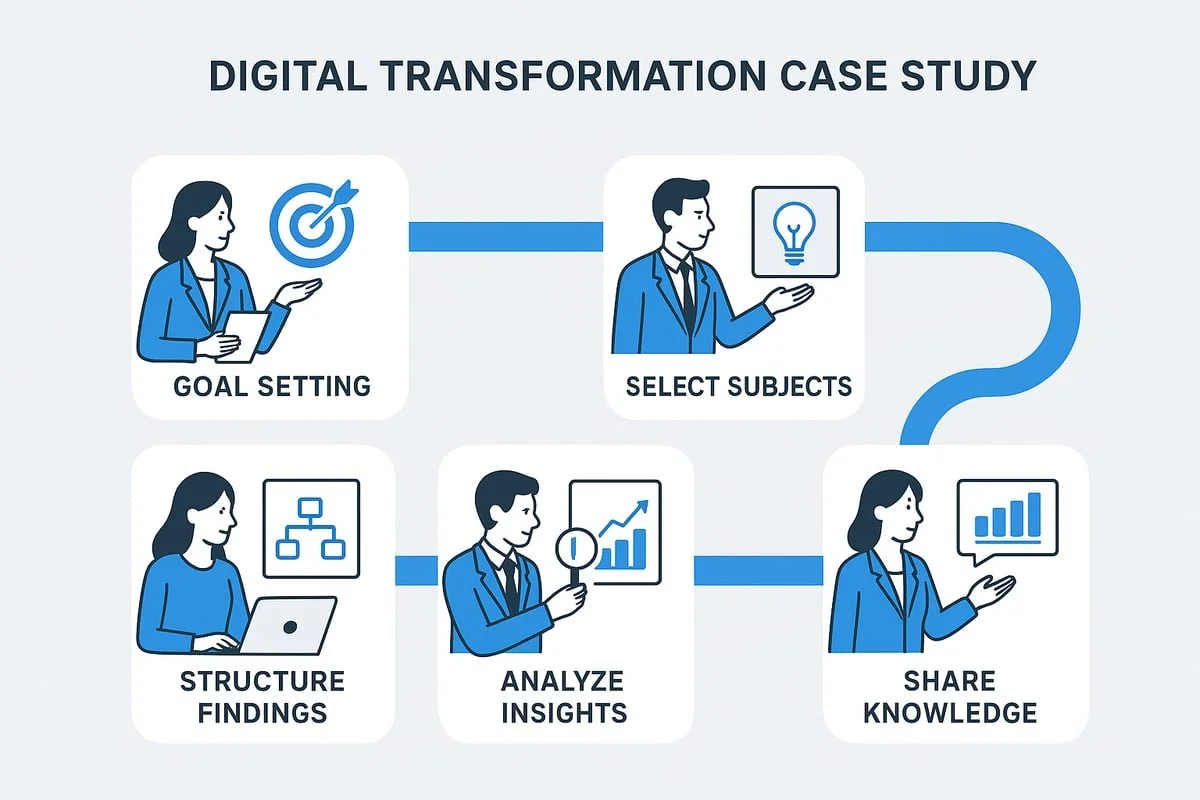
Step 1: Identifying Transformation Objectives and Success Metrics
Start your digital transformation case study by clarifying what success looks like. Align transformation goals directly with your organization’s broader strategy. Are you aiming for cost reduction, increased customer acquisition, or innovation in products?
Use the SMART criteria—Specific, Measurable, Achievable, Relevant, and Time-bound—to shape objectives. This ensures clarity for everyone involved. Common key performance indicators (KPIs) include revenue growth, Net Promoter Score (NPS), time-to-market, and operational efficiency.
For instance, Walmart’s digital transformation journey prioritized omnichannel sales and customer convenience. By setting clear, measurable targets, you create a strong foundation for your digital transformation case study.
Step 2: Selecting the Right Case Study Subjects
Choosing the right subjects is crucial for a compelling digital transformation case study. Look for examples that are relevant to your industry, significant in scale, and have clear, measurable outcomes.
Consider the balance between internal case studies—highlighting your own initiatives—and external ones, which can offer fresh perspectives. Sometimes, cross-industry stories reveal valuable lessons. For example, Walmart’s acquisition of Jet.com accelerated their e-commerce growth and became a pivotal story.
If you’re seeking inspiration, explore the Comprehensive agile transformation at a retail bank for a detailed example of how a financial institution navigated its own digital transformation case study.
Step 3: Structuring the Case Study for Maximum Impact
A well-structured digital transformation case study is easy to follow and delivers insights quickly. Focus on these core components: background, challenges, solutions, results, and lessons learned.
Support your story with data, visuals, and even testimonials to build credibility. Include before-and-after metrics to highlight measurable change. For instance, Walmart’s Buy Online, Pick Up In Store (BOPIS) rollout is best showcased with statistics showing improved sales and customer satisfaction.
A simple table can help:
ComponentDetailsBackgroundCompany context and market environmentChallengesMain obstacles facedSolutionsActions and technologies implementedResultsQuantitative and qualitative outcomesLessons LearnedKey takeaways and future implications
Step 4: Analyzing and Extracting Actionable Insights
After gathering data, analyze your findings to uncover what really drove results. Techniques such as thematic analysis, benchmarking, and root cause analysis can help you dig deeper.
Translate these insights into practical recommendations for future digital transformation strategies. Make sure your recommendations are relevant for 2026 and adaptable to changing technology and customer expectations.
A digital transformation case study becomes even more powerful when you benchmark against industry leaders, identify patterns, and present insights that others can act on.
Step 5: Communicating and Scaling Learnings Across the Organization
For a digital transformation case study to have lasting impact, share it widely and effectively. Use workshops, digital playbooks, or leadership briefings to help teams absorb and apply the lessons.
Foster a culture where continuous learning and adaptation are the norm. WalmartLabs, for example, plays a key role in driving innovation and knowledge sharing across the Walmart group. Your digital transformation case study should not only inform but also inspire others to take action.
By embedding findings into training, regular updates, and leadership discussions, you ensure that your digital transformation case study drives improvements long after the initial project ends.
Key Strategies for Successful Digital Transformation in 2026
Navigating digital transformation in 2026 requires a clear roadmap. Organizations that excel use a blend of visionary leadership, customer focus, robust technology, data-driven insights, and agile methods. These pillars shape any successful digital transformation case study and ensure efforts deliver measurable impact.
Leadership and Cultural Alignment
Visionary leadership sets the tone for any digital transformation case study. Leaders must articulate a clear digital ambition and inspire teams to embrace change.
Key actions include:
Building cross-functional transformation teams that break down silos.
Fostering a culture of experimentation, where calculated risks are encouraged.
Providing ongoing support and sponsorship from top executives.
Walmart’s transformation under Mike Duke is a model example. Leadership alignment enabled the company to invest early in e-commerce and omnichannel solutions, laying the groundwork for today’s digital-first strategies.
Customer-Centric Design and Experience
A winning digital transformation case study always puts the customer at the center. Start by mapping the end-to-end customer journey to uncover pain points and opportunities.
Next steps:
Leverage data and AI for hyper-personalization, tailoring experiences to individual preferences.
Integrate physical and digital touchpoints, ensuring seamless transitions between online and in-store interactions.
Research shows that personalized experiences can boost revenue by 10 to 15 percent. Focusing on the customer not only drives growth, it also builds loyalty and resilience.
Technology Enablement and Integration
Choosing and integrating the right technology stack is foundational for any digital transformation case study. Organizations should evaluate solutions for scalability, interoperability, and alignment with business goals.
Essential components:
Cloud platforms for flexibility and speed.
AI and automation tools for operational efficiency.
Robust cybersecurity to protect data and maintain trust.
Walmart’s adoption of the Polaris semantic search engine improved online shopping, demonstrating how targeted technology investments support digital ambitions.
Data-Driven Decision Making
Data is the fuel powering every modern digital transformation case study. Building a robust data infrastructure enables predictive analytics, real-time dashboards, and smarter decisions.
Key practices include:
Using predictive analytics for demand forecasting and inventory optimization.
Implementing real-time dashboards to monitor performance and adjust quickly.
Walmart leverages big data for targeted marketing and operational efficiency. By making data accessible and actionable, organizations gain a competitive edge and continuously refine their strategies.
Agile Ways of Working and Continuous Improvement
Agility is the backbone of a successful digital transformation case study. Embedding agile practices enables rapid prototyping, iterative delivery, and swift responses to feedback.
Best practices:
Establish cross-functional agile teams to drive transformation.
Celebrate quick wins to build momentum and sustain engagement.
Share learnings across the organization to fuel continuous improvement.
For a practical example, see this organisational design case study for agility, which breaks down how companies can structure for speed and adaptability in digital transformation.
By focusing on these strategies, organizations can create a digital transformation case study that delivers results in 2026 and beyond.
Lessons Learned from Leading Digital Transformation Case Studies
What can we learn from the world’s most effective digital transformation case study examples? As organizations accelerate change, understanding real outcomes and lessons is crucial. The right insights help leaders avoid common traps and replicate success. Let’s explore what sets leading transformations apart, what can go wrong, and how real companies have navigated the journey.
Common Success Factors
Successful digital transformation case study research reveals a consistent set of winning factors. These elements show up across industries and organization sizes.
Key success factors include:
Strong leadership alignment: Transformation champions at the top drive momentum.
Clear vision and measurable objectives: Teams understand the desired outcome and how progress is tracked.
Customer-centric mindset: Every digital transformation case study emphasizes the need to design for customer value.
Investment in talent and upskilling: People are empowered with new skills and tools.
Strategic partnerships and acquisitions: Collaborations provide scale, expertise, or speed.
Here’s a quick comparison:
Success FactorImpact on OutcomesLeadership alignmentSustains commitment and resource allocationMeasurable objectivesKeeps teams focused and accountableCustomer-centric focusDrives adoption and satisfactionTalent and upskillingBuilds in-house capability for future innovationPartnershipsAccelerates progress and broadens capabilities
Every digital transformation case study that delivers lasting change shares these traits. Organizations that prioritize these elements set themselves up for ongoing success.
Pitfalls and How to Avoid Them
Even with the best plans, digital transformation case study reviews show that pitfalls are common. Many organizations stumble due to a few recurring challenges.
Frequent pitfalls include:
Underestimating the need for change management and cultural adaptation
Misalignment between IT and business strategies
Choosing overly complex technologies that hinder adoption
Failing to measure progress or communicate wins
To avoid these issues:
Build a robust change management program from day one.
Foster collaboration between business and IT teams.
Select technologies that are scalable, user-friendly, and match business needs.
Define clear KPIs and share regular progress updates.
A digital transformation case study often highlights how early missteps can derail momentum. Organizations that learn from these challenges become more resilient and agile.
Real-World Examples: Walmart and Beyond
Real-world digital transformation case study examples offer powerful proof of what works. Walmart stands out for its omnichannel excellence, data-driven personalization, and smart acquisitions. By aligning leadership, focusing on the customer, and investing in technology, Walmart has grown both revenue and customer loyalty.
Beyond retail, sectors like banking and insurance have seen transformation success, too. Companies with mature digital transformation case study programs report 23% higher profitability, according to MIT Sloan. The public sector is also progressing rapidly. For instance, Digital transformation in the public sector illustrates how government organizations are reimagining services using digital-first approaches.
These examples reinforce the value of learning from diverse industries. Whether in commerce or government, the right digital transformation case study can inspire new thinking and guide strategy. By applying these lessons, organizations can build transformation programs that are both effective and sustainable.
Measuring and Sustaining Digital Transformation Success
Measuring and sustaining digital transformation success is essential for long-term business growth. Without clear metrics and ongoing evaluation, even the most innovative digital transformation case study can lose momentum or fail to deliver expected value. Organizations must establish a robust framework to not only track but also continuously improve outcomes.
Establishing Metrics and KPIs
Success in any digital transformation case study starts with well-defined metrics. Quantitative measures like revenue growth, customer satisfaction, and digital adoption rates provide a clear picture of progress. Qualitative metrics, such as employee engagement and customer feedback, offer deeper insights into transformation impact.
To align KPIs with transformation objectives, organizations should:
Map metrics directly to strategic goals.
Choose a mix of leading and lagging indicators.
Use both internal benchmarks and industry standards.
For example, Walmart tracks conversion rates, app downloads, and the adoption of new services like BOPIS. In the Building the AI operating system case study, organizations leverage AI-driven analytics to measure the effectiveness of digital initiatives across commercial teams. This approach ensures that every digital transformation case study is grounded in real, actionable data.
Continuous Monitoring and Adaptation
Measurement is not a one-time event. Sustaining digital transformation case study results requires real-time analytics, regular reviews, and rapid adaptation. By implementing dashboards and feedback loops, organizations can quickly spot trends, address issues, and adjust strategies.
Here are best practices for continuous monitoring:
Set up real-time dashboards for key KPIs.
Schedule monthly or quarterly reviews with stakeholders.
Integrate feedback from users and frontline employees.
In manufacturing, continuous monitoring has led to impressive outcomes, as shown in Digital Transformation in Manufacturing: 35% ROI Case Studies. These examples highlight how ongoing measurement and adaptation can sustain value and drive innovation in every digital transformation case study.
Scaling and Embedding Transformation
To sustain success, organizations must scale digital practices across all teams. Embedding transformation means creating governance structures, updating operating models, and investing in talent development. A digital transformation case study often reveals that success grows when learnings are shared and best practices are adopted widely.
Effective strategies for scaling include:
Establishing a transformation office or center of excellence.
Encouraging cross-functional collaboration.
Providing training and upskilling programs.
By embedding these elements, companies ensure that digital transformation becomes part of their DNA, not just a temporary project.
Future-Proofing Digital Transformation Initiatives
The digital landscape is always evolving. To future-proof any digital transformation case study, leaders must stay ahead of trends like AI, sustainability, and regulatory shifts. This means investing in continuous learning, leadership development, and innovation roadmaps.
Key actions for future-proofing include:
Monitoring emerging technologies and industry trends.
Creating adaptable strategies for new challenges.
Building a culture that welcomes change and experimentation.
By taking these steps, organizations can ensure their digital transformation case study results are not only sustained but also positioned for long-term growth.
Case Study Templates and Tools for 2026
Building a compelling digital transformation case study in 2026 requires more than just documenting a project’s journey. The right template, tools, and communication strategies can transform raw data into actionable insights. Let’s explore what makes a high-impact case study, the platforms that streamline creation, and the best ways to tailor your story for every audience.
Essential Elements of a High-Impact Case Study Template
A successful digital transformation case study must be structured for clarity and impact. Start with an executive summary to provide context and highlight key outcomes. Follow with background information, outlining the business challenge and the environment before transformation.
Include a section that details the challenges faced and the specific pain points addressed. Clearly describe the solutions implemented, supported by data and visuals such as process maps or timelines. Present measurable results, using before and after metrics to show tangible improvements.
Conclude with lessons learned and practical takeaways. This structure ensures your digital transformation case study is comprehensive, engaging, and easy to digest for any reader.
Digital Tools and Platforms for Building and Sharing Case Studies
Modern platforms make it easy to create, visualize, and share your digital transformation case study. Collaborative tools like Confluence, Notion, and Miro help teams document findings, brainstorm, and map out transformation journeys. For data visualization, Tableau and Power BI turn complex data into clear, actionable charts and infographics.
Organizations can also reference established frameworks for inspiration. For example, the UNHCR Digital Transformation Strategy 2022–2026 provides a real-world template for structuring transformation initiatives and communicating progress at scale.
Internal knowledge portals and digital playbooks ensure that case studies are accessible and easy to update, making continuous learning part of the culture.
Tips for Customizing Case Studies for Different Stakeholders
Tailoring a digital transformation case study to your audience boosts engagement and understanding. Executives often prefer concise summaries and high-level results, while technical teams need detailed breakdowns and process maps. Frontline employees benefit from clear, relatable stories and visual aids.
Use storytelling techniques to make your case study memorable. Incorporate testimonials, quotes, and real-life scenarios. For industry-specific examples, consider referencing initiatives like the AI-Enhanced Business Process Automation in Insurance, which demonstrates how sector context shapes transformation strategies.
Always ensure your digital transformation case study is accessible, visually appealing, and easy to navigate for every stakeholder group.
Example: Walmart’s Case Study Framework
Walmart’s approach to digital transformation case study development emphasizes transparency and alignment. Each case study starts with a clear executive summary, followed by a background of the business unit or challenge. The team documents the problem, solution steps, and the technologies used, supported by data charts and customer feedback.
Visual elements like process timelines and infographics are used to communicate progress. Lessons learned are summarized at the end, highlighting what worked well and what could be improved.
By sharing these case studies internally and externally, Walmart fosters a culture of continuous improvement and ensures organization-wide buy-in for digital initiatives.
Checklist for Creating Your 2026 Digital Transformation Case Study
Use this step-by-step checklist to streamline your digital transformation case study process:
Define clear objectives and success metrics
Gather all relevant data, visuals, and testimonials
Structure your content: summary, background, challenges, solution, results, lessons learned
Use collaborative tools for drafting and review
Tailor the case study for each stakeholder group
Incorporate real-world examples and references where relevant
Share the finished case study via internal portals or playbooks
Avoid common mistakes such as omitting key results or overcomplicating technical details. By following this checklist, your digital transformation case study will be both actionable and impactful, helping your organization drive future success.
As you explore the strategies and real-world examples in this guide, you’ll see how the right approach can turn digital transformation from buzzword to real-world results. Whether you’re looking to set clear objectives, build a data-driven culture, or scale agile practices across your teams, having a partner who understands both strategy and hands-on delivery makes all the difference. If you’re ready to move from ideas to measurable impact and want support tailored to your organization’s unique journey, Contact us now to get started.
